When it comes to using an MMA (Manual Metal Arc) welding machine in a confined space, proper ventilation is not just a recommendation; it’s an absolute necessity. As a supplier of high – quality MMA welding machines, I’ve seen firsthand the importance of understanding and implementing the right ventilation systems. In this blog, I’ll delve into the reasons behind the need for ventilation, the types of ventilation required, and how to ensure a safe and productive welding environment. MMA Welding Machine
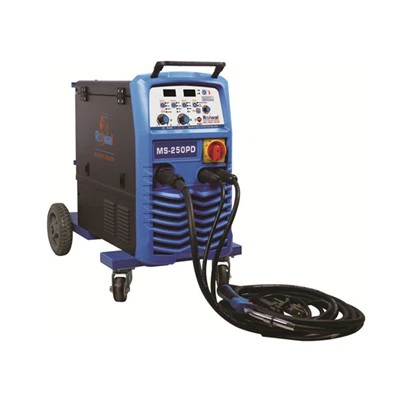
Why Ventilation is Crucial in Confined Space MMA Welding
MMA welding involves creating an electric arc between a consumable electrode and the workpiece. During this process, a variety of hazardous substances are produced. The most prominent among them are welding fumes. These fumes are a complex mixture of metal oxides, silicates, and fluorides. For example, when welding mild steel, fumes may contain iron oxide, manganese oxide, and small amounts of other metals.
Exposure to welding fumes can have severe health consequences. Short – term exposure can cause irritation of the eyes, nose, and throat, as well as headaches, dizziness, and nausea. Prolonged exposure, on the other hand, can lead to more serious conditions such as respiratory diseases (like asthma and bronchitis), metal fume fever, and even long – term neurological effects due to the presence of heavy metals like manganese.
In a confined space, the accumulation of these fumes is much faster compared to an open environment. Without adequate ventilation, the concentration of harmful substances can quickly reach dangerous levels, putting the welder’s health at immediate risk. Moreover, poor ventilation can also lead to a build – up of carbon monoxide (CO), a colorless and odorless gas that is produced during the welding process. CO can displace oxygen in the bloodstream, leading to carbon monoxide poisoning, which can be fatal.
Types of Ventilation for Confined Space MMA Welding
Local Exhaust Ventilation (LEV)
Local exhaust ventilation is considered the most effective method for removing welding fumes at the source. It works by capturing the fumes as they are generated and transporting them away from the welding area. A typical LEV system consists of a hood or capture device, a ductwork system, and a fan.
The hood should be placed as close to the welding arc as possible to ensure maximum capture efficiency. There are different types of hoods available, such as fixed hoods, flexible arm hoods, and downdraft tables. Fixed hoods are suitable for welding operations that are performed in a specific location, while flexible arm hoods offer more flexibility and can be adjusted to different welding positions. Downdraft tables are ideal for small parts welding, as they draw the fumes down through the table surface.
The ductwork should be properly sized and designed to minimize resistance and ensure smooth airflow. It should also be made of a suitable material, such as galvanized steel or PVC, to prevent corrosion and leakage. The fan is responsible for creating the necessary suction to draw the fumes through the hood and ductwork. The capacity of the fan should be selected based on the size of the hood, the length and diameter of the ductwork, and the required airflow rate.
General Ventilation
General ventilation, also known as dilution ventilation, is used to dilute the concentration of welding fumes in the confined space. It works by introducing fresh air into the space and exhausting the contaminated air. This can be achieved through the use of fans, air – handling units, or natural ventilation openings.
General ventilation is less effective than local exhaust ventilation in removing welding fumes at the source, but it can still play an important role in maintaining a safe working environment. It is particularly useful in situations where local exhaust ventilation is not practical or sufficient. For example, in a large confined space with multiple welding operations taking place simultaneously, general ventilation can help to reduce the overall concentration of fumes.
However, it’s important to note that general ventilation alone is usually not enough to provide adequate protection in confined space MMA welding. It should be used in conjunction with local exhaust ventilation to ensure the best possible air quality.
Calculating the Ventilation Requirements
Determining the appropriate ventilation rate for a confined space MMA welding operation is a complex process that depends on several factors. These factors include the size of the confined space, the type of welding being performed, the number of welders working in the space, and the type of materials being welded.
One common approach is to use the American Conference of Governmental Industrial Hygienists (ACGIH) guidelines. According to these guidelines, the ventilation rate should be sufficient to maintain the concentration of welding fumes below the Threshold Limit Value (TLV). The TLV is the maximum concentration of a substance in the air that a worker can be exposed to over a specified time period without adverse health effects.
To calculate the ventilation rate, you first need to determine the emission rate of welding fumes. This can be estimated based on the type of welding process, the welding current, and the electrode type. Once you have the emission rate, you can use the following formula to calculate the required ventilation rate:
[Q=\frac{E}{C}]
where (Q) is the ventilation rate (in cubic feet per minute or cubic meters per hour), (E) is the emission rate of welding fumes (in grams per minute or kilograms per hour), and (C) is the allowable concentration of welding fumes (in milligrams per cubic meter).
It’s important to note that these calculations are only estimates, and actual ventilation requirements may vary depending on the specific conditions of the welding operation. It’s always a good idea to consult with a ventilation engineer or an occupational health and safety professional to ensure that the ventilation system is properly designed and installed.
Ensuring Proper Ventilation System Operation
Once the ventilation system is installed, it’s important to ensure that it is operating properly. Regular maintenance and inspection are essential to keep the system in good working condition.
The hoods and ductwork should be inspected regularly for blockages, leaks, and damage. Any blockages should be removed immediately to ensure proper airflow. Leaks in the ductwork should be sealed to prevent the escape of welding fumes. The fan should also be inspected regularly for proper operation, and the motor should be lubricated as recommended by the manufacturer.
In addition to regular maintenance, it’s also important to monitor the air quality in the confined space. This can be done using air sampling equipment to measure the concentration of welding fumes and other hazardous substances. If the concentration exceeds the allowable limits, adjustments should be made to the ventilation system, such as increasing the airflow rate or improving the capture efficiency of the hoods.
Conclusion

In conclusion, proper ventilation is essential when using an MMA welding machine in a confined space. It helps to protect the welder’s health by removing welding fumes and other hazardous substances from the air. Local exhaust ventilation is the most effective method for removing fumes at the source, but general ventilation can also play a support role. By calculating the appropriate ventilation requirements, installing a properly designed ventilation system, and ensuring its proper operation, you can create a safe and productive welding environment.
Deep Well Submersible Pump As a supplier of MMA welding machines, I understand the importance of providing not only high – quality welding equipment but also information on how to use it safely. If you’re in the market for an MMA welding machine or need advice on ventilation systems for confined space welding, I encourage you to reach out. Our team of experts is ready to assist you in finding the right solutions for your welding needs and ensuring a safe working environment.
References
- American Conference of Governmental Industrial Hygienists (ACGIH). Threshold Limit Values (TLVs) and Biological Exposure Indices (BEIs).
- Occupational Safety and Health Administration (OSHA). Welding, Cutting, and Brazing Standards.
- British Occupational Hygiene Society (BOHS). Guidance on Local Exhaust Ventilation for Welding Processes.
Lewei Pumps Industry Co., Ltd.
Lewei Pumps Industry Co., Ltd. is one of the most professional mma welding machine manufacturers and suppliers in China, featured by quality products and low price. Please rest assured to buy bulk discount mma welding machine for sale here and get free sample from our factory. Also, customized service is available.
Address: Shanshi Industrial Zone, Daxi Town, Wenling City, Zhejiang Province, China
E-mail: info@rolwal.com
WebSite: https://www.rolwalpumpweld.com/
