When I first started supplying steam hoses to industrial facilities across North America, I quickly learned that one size never fits all—especially when it comes to paper mills. I once had a paper mill manager tell me, “Steam hoses here don’t just carry heat; they keep our entire production line running. If a hose fails, we’re talking thousands in lost production every hour.” That stuck with me, and it’s why I’ve spent years refining what makes a steam hose specific to a paper mill’s unique demands. Today, I want to walk you through the non-negotiable requirements that separate a standard steam hose from one built for the rough, high-stakes environment of paper manufacturing. Steam Hose

Let’s start with what paper mills actually do with steam. Steam is the backbone of every paper production step: it’s used to cook wood chips into pulp, dry the finished paper, heat the large vats that process recycled materials, and even power some of the mill’s auxiliary equipment. Unlike a food processing plant, where steam might be used gently for mixing, paper mill steam is often superheated—meaning it’s heated above the boiling point of water, sometimes reaching temperatures of 400°F (204°C) or higher. That extra heat is critical for breaking down tough wood fibers, but it’s brutal on hoses. A standard hydraulic hose can’t handle that kind of continuous, extreme heat; the rubber outer layer will crack, the internal reinforcement will weaken, and the hose will fail fast. So first, paper mill steam hoses need materials rated for both the temperature and pressure of that superheated steam.
I’ve seen too many mills try to cut corners here. One customer in Wisconsin once bought a cheap, generic steam hose that failed after just three weeks. When I inspected the damage, the inner lining had melted from the inside out, and the steel wire reinforcement had corroded from steam seepage. That’s when I realized: the inner tube isn’t just a part of the hose—it’s the first line of defense. For paper mills, the inner tube needs to be made of synthetic rubber compounds that are resistant to both high temperature and steam degradation. EPDM (Ethylene Propylene Diene Monomer) is a common choice, but not all EPDM is created equal. Paper mills need EPDM that’s specially formulated to resist hydrolysis—steam can break down certain rubber molecules over time, leading to leaks. Some hoses use neoprene, but neoprene tends to harden at high temperatures, making it less flexible for the long, awkward runs common in mill piping. I recommend EPDM with a steam-resistant additive, rated for at least 450°F (232°C) to account for peak superheat conditions.
Next, reinforcement. Paper mills have steam pressures that are typically between 150 and 300 PSI, and sometimes even higher for processes like pulp cooking. A hose with only a single layer of woven polyester will stretch and burst under that pressure. That’s why paper mill steam hoses need multiple layers of high-tensile strength reinforcement. Most reliable hoses use two or three plies of steel wire braid, or a combination of steel wire and synthetic fiber. Steel wire is non-negotiable here; synthetic fibers like nylon can weaken at high temperatures, and steel maintains its tensile strength even under constant heat and pressure. The reinforcement also needs to be bonded securely to the inner tube and outer cover—if there’s a gap, steam can get trapped between layers, causing blisters that lead to hose failure. I’ve tested hoses where poor bonding caused the reinforcement to separate after just a month of use, and the result was a dangerous rupture that sprayed scalding steam across a 10-foot radius.
The outer cover is another area where paper mills have specific needs, and it’s not just about durability. Paper mills are messy places: wood dust, pulp fibers, sticky resin from wood, and cleaning chemicals (like caustic soda, used to break down lignin) are everywhere. A standard rubber outer cover will absorb these contaminants, breaking down over time. The outer cover needs to be abrasion-resistant, chemical-resistant, and also cut-resistant. Paper mills often have heavy equipment moving around, and hoses can get dragged across concrete floors or bumped by forklifts. A cover made of chlorinated rubber (CR) or a special abrasion-resistant EPDM blend works well here. I also make sure the outer cover is black—sunlight can degrade rubber, and black covers block UV rays if hoses are stored outside, which many mills do due to limited indoor space.
Flexibility is a requirement too, and it’s a tricky balance. Paper mills have steam lines that run through tight spaces, around large pulp vats, and between heavy machinery. A hose that’s too stiff will be hard to route, leading to kinks that restrict steam flow and put extra stress on the connections. But a hose that’s too flexible will collapse under pressure, especially when connected to small-diameter lines. I design my paper mill-specific steam hoses with a flexible core that maintains its shape at high pressure—using a helix reinforcement between the braided steel and inner tube to prevent kinking. That helix also adds extra strength without making the hose too heavy, which is important for maintenance crews who have to lift and maneuver hoses during routine checks or replacements.
Now, let’s talk about connections. Even the best hose is useless if the fittings fail, and paper mills put unique stress on connections. Steam hoses are often connected to rigid pipe systems, and the constant expansion and contraction from heat can cause fittings to loosen. Paper mills also use quick-disconnect fittings for hoses that need to be moved between different production areas—those fittings have to lock securely even under 300 PSI pressure, and resist corrosion from steam and mill chemicals. I use stainless steel fittings for all my paper mill steam hoses, not carbon steel. Carbon steel will rust over time, and rust particles can get into the steam line, contaminating the pulp and ruining entire batches of paper. Stainless steel fittings also resist the high temperatures and moisture of the mill environment, so they last longer than cheaper alternatives. I also recommend that mills use full-flow fittings to reduce pressure drop, which saves energy because the mill doesn’t have to work as hard to move steam through the hose.
One often-overlooked requirement is resistance to thermal cycling. Paper mills don’t run 24/7 without stops; they do routine shutdowns for maintenance, which means hoses are cooled down and reheated repeatedly. Every time a hose goes from room temperature to 400°F, the materials expand, and when it cools, they contract. Standard hoses can develop micro-cracks from this constant expansion and contraction, leading to leaks over time. My paper mill steam hoses are tested to handle at least 1,000 thermal cycles, which is more than enough for even the busiest mill’s maintenance schedule. I once supplied a set of hoses to a mill that shut down every 90 days—those hoses lasted 18 months, compared to the 3 months the old hoses had lasted, just because they were designed for thermal cycling.
Safety is, of course, non-negotiable, and paper mills have stricter safety standards than most industrial facilities. Steam hoses can cause severe burns if they fail, so they need to be visually identifiable. I color-code my paper mill steam hoses with a high-contrast orange outer cover, which is easy to spot even in the dimly lit areas of a mill. Some mills also require hoses to have pressure relief valves built in, which prevent the hose from overpressurizing if the steam line is blocked. I include a pressure relief point as a standard feature in all my mill-specific hoses, and I make sure they meet OSHA’s standards for industrial steam equipment. I also test every batch of hoses before they leave my warehouse: each one is pressure-tested at 1.5 times the maximum working pressure, and I check for leaks, blisters, or weak points. No hose goes out without passing that test—because I know a failure here isn’t just a product problem, it’s a safety problem.
Another thing I’ve learned: paper mills don’t just use steam for pulp and drying. Some mills use steam for space heating, for cleaning equipment, and even for powering small turbines. That means they need hoses in different lengths and diameters—sometimes 2-inch hoses for small auxiliary lines, sometimes 8-inch hoses for main steam lines. I keep a range of sizes in stock, but I also work directly with each mill to custom-make hoses that fit their exact routing needs. One mill in Michigan had a 12-foot run of hose that had to curve around a large pulp digester; instead of making a straight 12-foot hose that would kink, I bent the core before reinforcing it, so the hose fit perfectly and didn’t restrict flow. That’s the kind of attention to detail that makes a hose work for a paper mill, not against it.
I’ve also encountered mills that make the mistake of using general-purpose steam hoses for other applications. For example, a mill might use a steam hose designed for a laundromat, where steam temperatures are lower and the environment is cleaner. That hose will last a week in a paper mill, whereas my paper mill-specific hoses last months. The difference is in the design: the inner tube resists hydrolysis, the reinforcement is rated for mill-level pressure, the outer cover resists abrasion and chemicals, and the fittings are corrosion-resistant. It’s not that the other hoses are bad—they just aren’t built for the specific, harsh conditions of paper manufacturing.
Now, let’s talk about maintenance, because even the best hose won’t last if it’s not cared for. I advise my paper mill customers to inspect their steam hoses monthly: check for cracks in the outer cover, loose fittings, or any signs of steam seepage. I also recommend flushing hoses regularly to remove pulp residue and chemicals that can break down the rubber. Paper mills have a lot of moisture, so storing hoses in a dry area when not in use prevents mold and mildew growth, which can weaken the inner tube. I provide detailed maintenance guides to all my customers, because a hose that’s properly cared for will last twice as long as one that’s neglected.
Over the years, I’ve built my reputation on understanding paper mill needs, not just selling hoses. I don’t just list specifications—I’ve been in the mill, seen the production lines, talked to maintenance crews who deal with hose failures every day. That’s why my steam hoses are designed to solve the exact problems paper mills face: lost production, safety risks, frequent replacements. I once had a manager tell me that switching to my hoses saved them $20,000 a year in replacement costs and lost production. That’s the kind of impact I aim for.
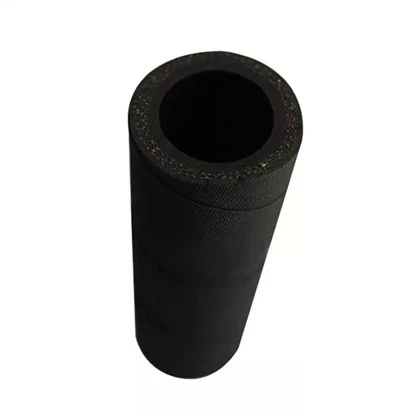
If your paper mill is dealing with frequent steam hose failures, high maintenance costs, or safety concerns, let’s connect. I can help you assess your current needs, recommend the right hose for your specific processes, and provide custom solutions that fit your production lines. Don’t let a subpar steam hose disrupt your operations—reach out to discuss how I can support your mill’s unique requirements.
Rubber Oil Hose References
- ASTM International. (2021). Standard Specification for Rubber Steam Hoses. ASTM D1047-21.
- Paper Industry Technical Association. (2020). Steam System Best Practices for Pulp and Paper Mills. PITA Report 456.
- Occupational Safety and Health Administration. (2019). Safety Standards for Industrial Steam Equipment. 29 CFR 1910.110.
- Rubber Manufacturers Association. (2022). Guidelines for Hose Reinforcement in High-Temperature Industrial Applications. RMA Bulletin 89.
Ningbo Haidu Auto Parts Co., Ltd.
As one of the most professional steam hose manufacturers and suppliers in China, we’re featured by cheap products and good service. Please rest assured to buy durable steam hose at competitive price from our factory. Also, OEM service is available.
Address:
E-mail: Sale6@sterlingautoparts.com
WebSite: https://www.cnsiliconehose.com/
