Alright, let’s break this down like I would when walking a new moldmaker through the shop floor—keep it real, no fancy jargon for the sake of it. Injection Industrial Mold
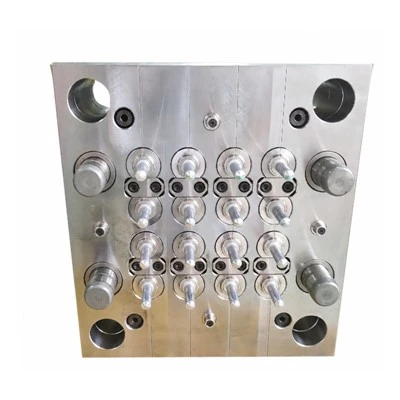
What even is EDM in industrial mold making? If you’re an injection mold supplier (that’s us, by the way), you know you can’t just grind every tight-tolerance feature on a mold with a mill. Sometimes you’ve got those tiny, sharp corners, or shapes that are too delicate for even the sharpest end mill, or materials so hard they’d snap a tool faster than a bad batch of resin. EDM fixes that. Short for Electrical Discharge Machining, it’s that unassuming black box in our back shop that’s a total workhorse for making molds that last.
Let’s keep it plain: EDM doesn’t cut with a physical tool the way a CNC mill does. It uses electrical sparks—super controlled, tiny sparks—to erode material away from a workpiece. That’s why it’s sometimes called “spark machining” around here, and yeah, we call it EDM 90% of the time because it’s way easier to say mid-lunch when someone’s yelling over the shop noise. The sparks jump between two electrodes: one’s the tool (we call it the “wire” or “electrode,” depending on the type), the other’s the mold steel blank we’re working on. The whole thing’s submerged in dielectric fluid, usually oil or deionized water, to flush away the tiny eroded metal bits and keep the sparks consistent. No direct contact, so zero tool wear from pressure, no burrs, and it handles materials that’d turn a carbide tool into dust like a cheap plastic bottle left in the sun.
Now, there are two main types we use daily at our injection mold shop—let’s get specific because not all EDMs are made for mold making. First is Wire EDM (or sometimes “wire cut” around the shop floor). This is the one with that thin, spooled brass or copper wire zipping back and forth between two guides like a tiny metal spider web. It’s for slicing super precise, 2D shapes or thin slots in mold components—think cooling channels that curve around a rib, or the slits in a core pin that makes a hinge on a toy. We use it when we need tolerances tighter than a credit card’s chip gap, like ±0.0005 inches. If you tried to mill that, the tool would flex, leave chatter marks, or just snap because the cut is too narrow. Wire EDM never touches the steel, so that’s not an issue.
The second is Sinker EDM (or “ram EDM”). This is the blocky machine with the heavy electrode head that lowers straight down into the workpiece. We make custom electrodes out of graphite or copper, shaped exactly like the cavity or core feature we need—say, a tiny undercut for a bottle cap’s ridge, or a sharp corner that a mill can’t reach. The electrode doesn’t grind, it “sinks” into the mold steel as sparks eat away material, matching the electrode’s shape perfectly. Last month, we used it for a medical mold that needed a 0.010-inch deep pocket with 90-degree walls—no radius, no extra material left to hand-polish. That’s a win because handwork is slow and can mess up consistency over 100k+ mold shots.
Wait, why does this matter for injection industrial molds specifically? Let’s tie this to what we do. Our job isn’t just making any mold—it’s making molds that run for millions of shots without wearing out, that produce parts with zero flash or dimensional drift. Mold steels for injection molding are often P20, H13, or S7—hardened to take the punishment of molten plastic (some even go through heat treatment before EDM, because EDM works great on hard steel). If we used only CNC milling on a hardened H13 mold, we’d burn the tool, get inconsistent surface finishes, and have to do hours of secondary work. EDM’s surface finish might look a little rougher straight off the machine, but we can tune the spark parameters to leave a finish that’s almost ready for polishing, or even fine enough for cosmetic parts that don’t need extra work. Last quarter, we had a client with a automotive interior trim part that needed a smooth, scratch-free surface—we ran a finish EDM cycle at low spark energy, no hand-finishing, saved them 2 weeks on their timeline.
Also, EDM is non-contact, so we don’t have to worry about tool deflection. Think about a deep core pin in a mold for a toy car’s wheel—you can’t mill a 2-inch long, 0.125-inch diameter pin with a straight 90-degree wall because the end mill will wobble as it goes deeper. Sinker EDM lets us make that pin with perfect parallel walls, no taper, because the electrode is designed to match. And for undercuts—those features that would make a molded part impossible to eject without side actions—EDM is the only way to get the tight, precise shape without damaging the mold’s core or cavity. I still remember the first project our lead moldmaker handed me 3 years ago: a small consumer electronics mold with 8 tiny undercuts. If we’d tried to mill those, we’d have broken 3 tools and missed the deadline. Sinker EDM did it in 2 days, no mistakes.
But it’s not all perfect—EDM is slower than milling, so we only use it where it’s actually necessary. Wire EDM might take 10 hours to cut a single core insert, whereas a mill could do it in 2, but the milled part would need a 0.002-inch radius in the corner, which the client didn’t allow. We also have to deal with electrode wear—even tiny, that adds up over big jobs. So we use graphite electrodes for most jobs because they’re cheap and wear evenly, but copper for super tight tolerances because it’s more stable. Dielectric fluid maintenance matters too—if the oil has metal shavings in it, sparks go everywhere, and you get a rough finish or even damage the mold. Our machine operators check the fluid twice a shift, no exceptions.
Let’s get real about what this means for our clients. When you’re sourcing an industrial injection mold, you don’t just want a mold that makes parts—you want one that makes parts consistently, that doesn’t cost a fortune in maintenance, and that gets you to production fast. EDM is why we can deliver on that. Last year, we had a medical device client who needed a mold that produced 500k sterile parts without any dimensional shifts. The mold had 12 fine details that required tight corners and undercuts—all done with EDM. No tool wear issues, no hand-polishing errors, the mold ran exactly to spec from day one. That’s the value of knowing when to use EDM, not just pushing a mill button and calling it good.
Here’s a myth I hear all the time: “EDM is old tech, why not use laser machining or 3D printing?” Yeah, those are cool, but they’re not always better for high-volume injection molds. Laser machining has limited depth for tight corners, and 3D printed mold cavities often have surface finish issues that require secondary work, plus they can’t handle 1 million shots without cracking. EDM’s been around since the 1940s, but it’s evolved a lot—modern EDM machines have CNC controls that can hold tolerances to 0.0001 inches, auto-adjust spark energy, and even change electrodes on their own. We run our sinker EDM overnight unattended, so we don’t have to tie up operators for long cycles. That’s efficiency, not old tech.
If you’re reading this and you’re a product engineer or operations manager looking for an injection industrial mold supplier, think about what your mold needs. Are there tiny features, tight corners, undercuts, or hard materials? If yes, EDM is probably non-negotiable. Skip the mold shops that say they can “do it all with milling”—they’re cutting corners, literally, that will come back to bite you when your mold runs for 100k shots and starts producing bad parts. We’re that shop that knows when to pull out the EDM, that tunes the parameters to get the exact finish you need, and that doesn’t overcharge for it because we’ve streamlined our process over the years.
We recently wrapped up a project for a lawn equipment company—they needed a mold for a large, complex plastic handle with 3 internal ribs and a curved cooling channel. The ribs were too narrow for a mill, so we used wire EDM for them, and sinker EDM for the undercut that lets the part eject without a side action. The mold ran 2 million shots last quarter, no signs of wear, and the client’s part reject rate is under 0.1%. That’s the kind of result EDM delivers for industrial molds.
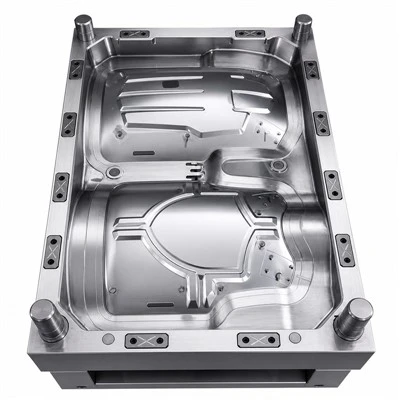
At the end of the day, EDM is just another tool in our injection mold making toolkit, but it’s one that makes the difference between a mold that’s good enough and one that’s reliable, precise, and built for high-volume production. If you’re ready to chat about your next mold project, whether it’s a small medical part or a large automotive component, we’re here to walk through which EDM (and other) processes make the most sense for your needs. Don’t hesitate to reach out—we know this stuff inside and out, and we’re not afraid to be honest about what works and what doesn’t.
Ballistic Mold References:
- "Electrical Discharge Machining for Mold Making," Modern Plastic Mold Making, 2022.
- Sinker vs Wire EDM: Applications for Industrial Molds, MoldMaking Technology, 2023.
- "Tolerance and Surface Finish Capabilities of EDM," SME Metalworking Handbook, 2021.
Taizhou Lingyue Mold and Plastic Co., Ltd.
Taizhou Lingyue Mold and Plastic Co., Ltd. is one of the most professional injection industrial mold manufacturers and suppliers in China, also supports customized service. If you’re going to buy advanced injection industrial mold made in China, welcome to get quotation from our factory. Quality products and low price are available.
Address: NO.18, Shangxian Road, North Industrial Zone, Huangyan, Taizhou City, Zhejiang, China
E-mail: ly@lingyuemold.com
WebSite: https://www.lingyuemold.com/
