Hey there, let’s cut through the jargon real quick—if you’ve ever stood next to an industrial air intake unit at a factory, power plant, or even a big HVAC system and thought, “Whoa, that’s loud,” you’ve basically met the silent party crasher that an industrial inlet silencer is here to kick out. For years, I’ve been on the ground as a silencer supplier, talking to plant managers, maintenance leads, and even HVAC engineers who’ve never really nailed what these things actually do beyond “mute noise.” Today, I’m gonna break that down like I would over a coffee at a job site—no stuffy textbooks, just real talk about how these little (well, not so little) pieces of kit keep operations running smooth and people sane. Industrial Silencers

First off, let’s get one misconception out of the way: industrial inlet silencers aren’t just giant earplugs for machines. Yeah, noise reduction is a huge part of their job, but that’s not the end of the line. Let’s start with the noise side, because that’s the most obvious pain point for anyone working around heavy gear. Think about how an intake works—most industrial systems pull massive amounts of air to run compressors, gas turbines, process blowers, or even large ventilation systems for manufacturing floors. When that air gets sucked in fast, it’s not a smooth breeze—It’s turbulent, choppy, and that vibration creates that high-pitched, ear-splitting whine that can make a 8-hour shift feel like a week. OSHA actually has strict rules for industrial noise exposure—most places max out at 85 decibels over 8 hours, and that inlet whine can easily hit 100+ decibels. That’s not just annoying; over time, it causes hearing damage, plus it messes with communication—you can’t hear someone yelling across the plant floor, which is a safety hazard. An inlet silencer takes that turbulent air, slows it down, and dampens the sound waves before they escape into the workplace. But like I said, that’s only the first job.
The next big function is airflow optimization, and this is the part that most people overlook. I’ve had a plant manager tell me once, “I just need a silencer that’s quiet—don’t mess with my airflow.” Trust me, that’s the #1 mistake people make when picking these. If a silencer is poorly designed, it creates backpressure. What’s backpressure? It’s like trying to blow air through a thin straw vs a thick one—your machine has to work harder to pull the same amount of air, which kills efficiency. Compressors, for example, can lose 5-10% of their energy if inlet backpressure is too high. That translates straight to higher electricity bills—thousands of dollars a year for a medium-sized plant. A good industrial inlet silencer balances noise reduction with minimal backpressure, so you don’t have to choose between quiet operations and lower utility costs. I always test our silencers in a lab before we send them out—we measure both the noise level coming out and the pressure drop across the unit, because both matter equally.
Wait, also, these silencers act as a barrier for unwanted stuff getting into the system. Yeah, I know—you put an inlet on to bring air in, not keep it out, but industrial air is dirty. It has dust, metal shavings, pollen, even small debris from construction or nearby yards. If that stuff gets sucked into a compressor or a turbine, it can cause wear and tear on the blades, clog filters, or even lead to unplanned downtime. That’s a huge expense—planned downtime is bad, but unplanned? Even worse, costing plants tens of thousands of dollars in lost production per day. Modern inlet silencers have internal baffles or porous acoustic materials (like fiberglass or mineral wool, enclosed in a mesh so they don’t blow away) that catch that debris before it reaches the core machinery. I had a client a few years back who worked in a steel mill—their old silencer was so old, it had no debris barrier, and they ended up with metal shavings in their blower, which shut them down for 3 days. After we installed our new silencer, their downtime from that issue dropped to zero. It’s a small feature, but it’s a game-changer for maintenance.
Let’s get specific with different use cases, because inlet silencers work differently depending on the machine. For gas turbines, which are used in power plants, the inlet air is pulled at super high speeds—like, hundreds of feet per second. That turbulence creates a low-frequency roar that can travel for miles, even affecting nearby neighborhoods. A turbine’s inlet silencer has to handle that high airflow, reduce low-frequency noise effectively, and still keep pressure drop low. For HVAC systems in large commercial buildings (think shopping malls or big office towers), inlet silencers keep the mechanical rooms quiet so workers in adjacent offices don’t hear the air handlers running. For process blowers in chemical plants, the silencer also has to be corrosion-resistant, since the air might have fumes that eat away at regular metal.
Another thing: compliance. I mentioned OSHA earlier, but there are also local noise ordinances now. More and more residential areas are built next to industrial parks, so a loud inlet could get the plant hit with fines or even ordered to shut down at night. I had a client in Southern California a while back who got a notice from the city because their inlet whine was waking up people in a new housing development 2 miles away. We installed custom inlet silencers that cut the noise by 18 decibels, which was exactly what the city required, and they didn’t get fined. That’s the compliance angle—silencers aren’t just a nice-to-have; they keep you on the right side of regulations and out of legal trouble.
Now, let’s talk about how these work inside, for anyone who’s curious. Most industrial inlet silencers are either linear (straight-through) or plenum-type, depending on the airflow. Linear ones are simple—they have a casing lined with acoustic material, and internal splitters that break up sound waves. When sound hits the acoustic lining, it gets absorbed, converted into heat, and dissipates. Plenum-type silencers are bigger, used for higher airflow rates, and have larger chambers that slow down air even more, which helps with low-frequency noise that linear ones might miss. The key is matching the silencer type to your specific machine’s airflow rate, noise frequency, and space constraints. A lot of suppliers sell a one-size-fits-all silencer, but that’s not how it works—every inlet is different. I always ask clients for their machine specs, current noise levels, and any pain points they’re having (like high energy bills or downtime) before recommending anything.
Wait, let’s circle back to that efficiency point, because it’s worth emphasizing. I did a quick calculation last year for a food processing plant that had 3 blowers. Their old inlet silencers had a pressure drop of 0.8 inches of water, which is pretty high. After we replaced them with our low-backpressure silencers, the pressure drop went down to 0.2 inches. That might sound small, but for their 100 HP blowers, that saved them about $12,000 a year in electricity costs. That’s not chump change. People usually think silencers only cost money, but they actually save you money long-term by cutting energy bills and reducing maintenance.
I get it—if you’re a plant manager, you’ve got a million things on your plate. You don’t have time to research silencer science, you just want something that works. That’s why my team and I make it easy. We don’t sell products we haven’t tested, we don’t upsell you on stuff you don’t need, and we work with you to get the right fit for your space and budget. A lot of people contact us because they’ve tried a cheap silencer from a big box supplier that either didn’t cut enough noise or made their machines work harder. We fix that.
At the end of the day, the function of an industrial inlet silencer boils down to three core jobs that all work together: first, protect people and comply with noise rules by cutting harmful sound. Second, keep your machinery running efficiently by minimizing backpressure, so you don’t waste energy. Third, keep debris out of your critical equipment, reducing unplanned downtime and maintenance costs. It’s not a fancy part, but it’s one of those unsung heroes that keeps industrial operations running smoothly, keeps workers safe, and keeps neighbors happy.
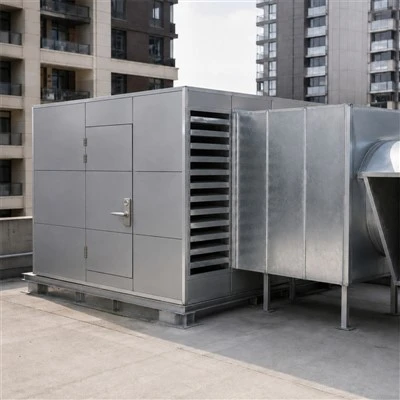
If you’ve got an inlet that’s too loud, your energy bills are through the roof, or you’re dealing with frequent maintenance issues from debris getting into your machines, I’m here to help. Shoot us a note to chat through your needs—we’ll walk through options, answer all your questions, and make sure you get the right silencer for your setup. No pushy sales talk, just real advice from someone who’s been in the industrial space for years.
Noise Control References
- Occupational Safety and Health Administration (OSHA). Noise Standards: 29 CFR 1910.95. U.S. Department of Labor.
- ASHRAE Handbook: HVAC Systems and Equipment. American Society of Heating, Refrigerating and Air-Conditioning Engineers.
- Noise Control for Industrial Equipment and Systems. Acoustical Society of America.
Nanjing Huajing Environmental Engineering Co., Ltd.
Nanjing Huajing Environmental Engineering Co., Ltd. is one of the most professional industrial silencers manufacturers and suppliers in China, also supports custom service and OEM service. Please feel free to buy durable industrial silencers at competitive price from our factory. Welcome to contact us for quotation.
Address: Room 518, No.12 Jinlan Road, Dongshan Subdistrict, Jiangning District, Nanjing City, Jiangsu Province, China
E-mail: contact@hualiving.cn
WebSite: https://www.hjacoustics.com/
