If you’ve ever walked through a construction site, pulled a cable for a residential wiring project, or installed power cords in an office, you’ve probably worked with low voltage power cables—and you’ve almost certainly interacted with XLPE insulation, even if you didn’t know it. For over a decade, I’ve been a low voltage power cable supplier, and one of the most common questions I get from contractors, electricians, and even project managers new to the industry is: “What makes XLPE different from the other insulation materials I’ve used?” It’s a fair question, too, because insulation is the unsung hero of any power cable—get it wrong, and you’re looking at downtime, safety hazards, or even costly replacements long before your project’s end date. Power Cable Low Voltage
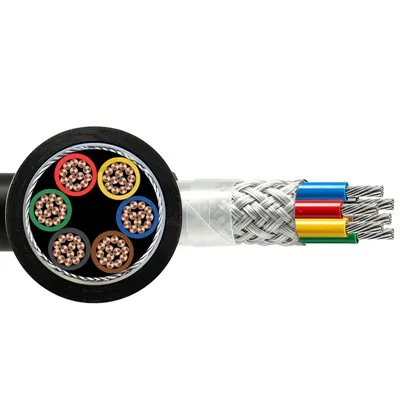
Let’s start with the basics: low voltage power cables are designed to carry electrical power up to around 1,000 volts (most residential wiring runs at 120/240 volts, commercial building feeds at 480 volts, so this is the range we deal with daily). The insulation around the cable’s copper or aluminum conductor does two core jobs: it keeps electricity contained so it flows only where it’s supposed to, and it protects the conductor from external damage, heat, moisture, and chemicals. Without good insulation, a cable can short out, cause a fire, or fail entirely when you need it most.
XLPE stands for cross-linked polyethylene, and before we dive into why it’s the go-to for low voltage cables, let’s break down what “cross-linked” actually means. Polyethylene is a common plastic, right? You find it in milk jugs, plastic bags, and even some old cable insulation. But regular polyethylene has a problem: it melts at relatively low temperatures—around 110 degrees Celsius, which is just a little hotter than the boiling point of water. That’s a big issue for power cables, because even low voltage cables get warm when they carry power, and in enclosed spaces like wall cavities, underground runs, or industrial equipment closets, temperatures can climb way higher. If a cable’s insulation melts, it loses its ability to contain electricity.
Cross-linking changes that. The process chemically bonds the long molecular chains of polyethylene together, turning them from a soft, thermoplastic material (one that melts when heated) into a thermoset material. Thermoset plastics don’t melt when exposed to heat—they just char if you get them hot enough, which makes them far more stable. For low voltage cables, that stability translates to some game-changing benefits.
First, temperature resistance. Standard PVC (polyvinyl chloride), another super common insulation material for low voltage cables, has a maximum continuous operating temperature of around 70 degrees Celsius. XLPE’s continuous rating is 90 degrees Celsius— that’s a 20-degree buffer, which might not sound like a lot, but in real-world use, it adds up. Imagine a commercial office building with dozens of cables running in a tight conduit; the heat from all those cables can raise the ambient temperature in the conduit by 10 or 15 degrees. With PVC, that puts you right at its upper limit, risking degradation over time. With XLPE, you’re still well within a safe range. Even short-term overloads—like when a building’s HVAC system kicks in all at once, or a construction site’s tools draw extra power—XLPE can handle much higher spikes without damage.
Second, moisture and chemical resistance. Low voltage cables don’t just live inside walls. We supply a lot of cables for underground runs, for agricultural settings, and for industrial facilities where they might be exposed to oils, solvents, or fertilizers. Regular polyethylene absorbs moisture over time, and PVC can break down when exposed to certain chemicals. XLPE, because of its cross-linked structure, is nearly impervious to both. I’ve had customers come to us with complaints of cables failing underground after a couple of years; 9 times out of 10, those were PVC-insulated cables, and swapping to XLPE has solved the problem for them. Last year, a farm equipment dealer in the Midwest told me their old PVC cables for powering outdoor lighting and machinery were cracking and failing every winter, when cold temperatures and soil moisture took their toll. We switched them to XLPE-insulated low voltage cables, and they haven’t had a single issue since.
Third, flexibility and long-term durability. Some people think cross-linking makes plastic too rigid, but for low voltage cables, XLPE strikes a really good balance. It’s flexible enough to pull through tight conduit, wrap around corners during installation, and handle minor movement (like a building shifting slightly over time) without cracking. And because it doesn’t degrade from heat or moisture as quickly as other materials, XLPE-insulated cables have a longer lifespan—typically 20 to 30 years, compared to 10 to 15 years for PVC-insulated equivalents. That’s a huge selling point for large projects, like hospital renovations or apartment complexes, where you don’t want to rework cabling any sooner than necessary.
Now, I don’t want to make it sound like XLPE is perfect—nothing in cable insulation is. It does have a couple of drawbacks that make it less ideal for some niche low voltage applications. For one, XLPE is more expensive upfront than PVC. If you’re doing a small, simple residential wiring job that only requires a few feet of cable, PVC might be the budget-friendly choice. It’s also more difficult to terminate than PVC; when you’re connecting a cable to a breaker or a piece of equipment, you have to strip off the insulation carefully without damaging the cross-linked material, and you need specialized tools for that. For contractors who are used to stripping PVC quickly, that can be a learning curve. Also, XLPE doesn’t have the same flame-retardant properties as PVC—wait, hold on, let me clarify that: modern XLPE formulations are flame-retardant, but traditional XLPE burns a bit easier than PVC, which is a consideration for indoor applications in places like elevator shafts or multi-story buildings, where fire safety is a top priority. That’s why a lot of low voltage cables for commercial indoor use are actually “LSZH” (low smoke zero halogen) XLPE, which adds flame and smoke resistance without the downsides of PVC.
Over the years, I’ve also seen a lot of confusion between XLPE and EPR (ethylene propylene rubber), another insulation material used for low voltage cables. EPR is also a cross-linked rubber, and it has even better temperature resistance than XLPE—up to 105 degrees Celsius continuous. But it’s even more expensive, and less flexible, so it’s mostly used for heavy industrial applications, like mining or offshore, where extreme conditions are the norm. For most standard low voltage projects, XLPE is the sweet spot between performance and cost.
A lot of people ask me: “How is XLPE made, anyway? Is it some fancy new technology?” The cross-linking process for XLPE has been around since the 1950s, but over the last 20 years, we’ve refined it a lot for low voltage applications. The main methods are chemical cross-linking (adding a peroxide to polyethylene to trigger the bond) and electron beam cross-linking (bombarding the polyethylene with high-energy electrons to create the molecular bonds). Electron beam cross-linking, or e-beam, is especially popular now because it’s more precise, produces less waste, and lets us tailor the insulation’s properties—like making it more flexible, or more resistant to specific chemicals—for different low voltage uses. For example, the cables we supply for underground agricultural runs use a slightly modified XLPE formula that’s resistant to the nitrogen and ammonia in fertilizer, something e-beam processing lets us adjust easily.
One of the most important things I’ve learned as a low voltage power cable supplier is that choosing the right insulation isn’t just about picking the most expensive or most high-performance material—it’s about matching the insulation to the application. A contractor doing a 10,000-foot underground run for a new housing development is going to benefit way more from XLPE than a electrician doing a 100-foot run for a home’s basement workshop, where budget is tight and the cable won’t be exposed to extreme conditions. That’s why we don’t just sell cables; we work with our customers to walk through their project, ask questions about where the cable will be run, what it will be exposed to, and what their timeline and budget are, to recommend the right insulation type.
I’ve seen firsthand what happens when you cut corners on insulation. A few years back, we had a customer who went with a cheaper, unrated PVC cable for a small commercial building’s electrical feed. Within a year, the cable was running next to a hot water pipe in the basement, and the PVC insulation softened, causing a short circuit that damaged the building’s main electrical panel and forced the business to close for three days. They came back to us for a replacement, and we supplied XLPE-insulated low voltage cables that same day, but the downtime cost them thousands of dollars more than the difference in cable price. That’s the thing about insulation: it’s easy to overlook when everything is working, but when it fails, the consequences add up fast.
For anyone working in construction, electrical, or facilities management, understanding the difference between XLPE and other insulation materials can make a big difference in the success of your project. It’s not just a technical detail; it’s a practical choice that affects installation time, long-term maintenance, and safety. As a supplier, I always make sure to explain that to every customer—no matter how big or small their project is.
At the end of the day, XLPE’s dominance in low voltage power cables isn’t an accident. It solves a lot of the problems that older insulation materials can’t, without breaking the bank. It’s durable, flexible, temperature-resistant, and adaptable to all kinds of applications, from residential wall wiring to commercial underground runs to industrial equipment cabling. If you’re planning a project that requires low voltage power cables, take a minute to think about the insulation—because it’s the part that will keep your power flowing, day after day, for years to come.
If you’re evaluating cable options for your next project or have questions about XLPE insulation for low voltage power cables, my team and I are here to help. We work with contractors, project managers, and facility teams to source the right cables for any application, no matter how unique. Reach out to us to discuss your requirements, and we’ll provide tailored recommendations and transparent pricing to fit your needs.
Power Cable Low Voltage References
- International Electrotechnical Commission (IEC) Standard 60502-1: Power cables with extruded insulation and their accessories for rated voltages from 1 kV (Um = 1,2 kV) up to 30 kV (Um = 36 kV) – Part 1: Cables for rated voltages of 1 kV (Um = 1,2 kV) and 3 kV (Um = 3,6 kV)
- The Cable Wizard: A Practical Guide to Power Cable Insulation Materials, 2nd Edition, National Electrical Contractors Association (NECA)
- “Cross-Linked Polyethylene (XLPE) Insulation for Low Voltage Cables,” IEEE Transactions on Power Delivery, Vol. 32, No. 4, 2017
Yangzhou Huayu Cable Co., Ltd.
Yangzhou Huayu Cable Co., Ltd. is one of the most professional power cable low voltage manufacturers and suppliers in China, also supports customized service with low price. Please feel free to wholesale advanced power cable low voltage made in China here from our factory. Contact us for pricelist.
Address: No.9 Jingang Road, Yangzhou City, Jiangsu Province, China
E-mail: info@huayucabletech.com
WebSite: https://www.huayucabletech.com/
