As a supplier of both indoor and outdoor winches, I get asked this question all the time—usually from customers who’ve just installed their first outdoor winch, or who’ve spent weeks troubleshooting a unit that’s stopped working when they needed it most. The short answer is yes, outdoor winches absolutely require regular maintenance. But the “why” and the “how” are where most people slip up, especially since outdoor winches face stressors that indoor units never do: salt air, temperature swings, dirt, moisture, and even UV radiation that eats away at unprotected metal parts. Let’s break this down, not as a sales pitch, but as someone who’s seen firsthand what happens when maintenance is skipped. Indoor and Outdoor Winches
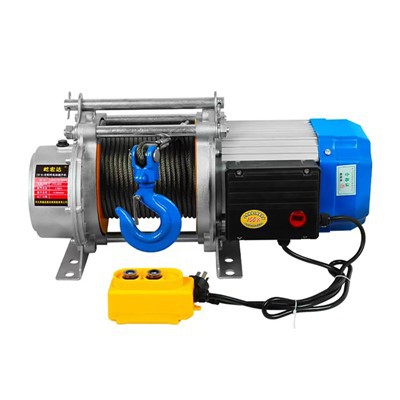
First, let’s get clear on what makes outdoor winches different. Indoor winches, for example, are often used in warehouses, construction trailers, or home workshops—enclosed spaces where conditions are controlled. Even if they’re exposed to occasional dust or fumes, they don’t have to battle consistent, harsh elements. Outdoor winches? They’re mounted on boat decks, off-road vehicles, construction cranes, farm equipment, and even tree-removal rigs. A winch on a boat in Florida’s coastal waters isn’t just near water—it’s exposed to salt spray, which is one of the most corrosive substances for metal. A winch on a farm in Iowa deals with dust, mud, and sudden temperature drops from 80°F in the afternoon to 30°F at night in the spring. These aren’t minor inconveniences; they’re factors that wear parts out exponentially faster without proper care.
I remember a customer from Texas who reached out last year, panicking because his 12,000-pound outdoor winch died mid-way through pulling a fallen tree from his property. He’d owned it for 18 months, never did anything beyond giving it a quick wipe down once a month. When our service team looked at it, the steel cable was frayed through in three spots, the gearbox was full of caked-on dirt and rust, and the brake assembly had seized up because it hadn’t been lubricated. The worst part? He could have avoided this with 10 minutes of work every two weeks, and a half-hour deep clean once a month. Instead, he ended up having to replace the entire winch, which cost him more than a yearly maintenance routine would have. That’s the kind of story that sticks with me, and why I make sure every customer we sell to gets a clear maintenance checklist—no fine print, no hidden costs.
So what does regular maintenance actually look like for outdoor winches? It’s not just “oil it once a year.” It’s a schedule tailored to how often you use the winch and what environment it’s in. Let’s split this into routine (weekly/bi-weekly) checks, monthly deep cleans, and quarterly/annual full inspections.
Weekly or bi-weekly checks are the quick wins, especially for people who use their winch regularly—say, a farmer who uses his for hauling feed or moving equipment every few days. First, inspect the steel cable: look for frays, kinks, broken wires, or any signs of corrosion. A frayed cable might seem like a small thing, but a single broken wire can weaken the cable by 10-15%, and if you ignore it, it can snap mid-lift, causing serious injury or property damage. Next, check the mounting bolts. Outdoor winches vibrate constantly—from a vehicle driving down a dirt road, from a boat cutting through waves. Those bolts can work themselves loose over time, even if you tightened them at installation. A loose winch isn’t just inefficient; it’s a safety hazard. Then, test the brake system. For any winch, the brake is what holds the load when you stop operating it. If the brake feels spongy or doesn’t hold a heavy load, that’s a sign it needs attention right away. We’ve seen winches slip because the brake pads were worn down, and the load fell—luckily, no one was hurt, but the equipment behind it was totaled.
Monthly maintenance is where you go a little deeper. First, a full clean. If your winch is on a boat, that means spraying it down with fresh water to remove salt spray—don’t use high-pressure water, though, because that can push water into the gearbox or motor, leading to internal rust. For farm winches, that’s hosing off caked mud and dirt, making sure no debris gets stuck between the cable and the drum. After cleaning, lubrication is key. But here’s a common mistake: using the wrong lubricant. Outdoor winches need a lubricant that can handle extreme conditions. Saltwater needs a corrosion-inhibiting grease; high temperatures (like in desert environments) need a high-temperature grease that won’t thin out; cold climates need a low-temperature grease that won’t get stiff. We stock a specific marine-grade grease for our outdoor winch customers who are on the coast, and a heavy-duty gear oil for construction winches that see daily use. You don’t want to use household oil or general-purpose grease—it will break down in harsh conditions, leaving parts unprotected. Also, lubricate not just the moving parts, but the cable itself. The cable is the workhorse of the winch, and if it’s not lubricated, it will corrode and wear out 2-3 times faster than a properly lubricated cable.
Quarterly and annual maintenance are the big-ticket items, the ones that most people skip until it’s too late. Every three months, you should pull the winch apart (or have a professional do it, if you’re not mechanically inclined) to inspect the internal parts: the gear set, the bearings, the motor armature. Look for signs of wear—scored gears, pitted bearings, dust buildup in the motor. For annual maintenance, this is when you do a full service: replace any worn parts, check the electrical connections (corrosion on wires is a big issue for outdoor winches), and test the winch under a full load to make sure everything is working as it should. Last year, we had a commercial fishing company as a customer. They scheduled annual maintenance for all their winches, and when our team inspected one, they found a small crack in the drum that would have failed during a big catch. Catching that early saved them over $5,000 in replacement costs and downtime on their busiest season.
Now, some people will argue: “My winch is made for outdoor use, so it should handle anything without maintenance.” That’s a common misconception. Outdoor winches are built to withstand exposure, but they’re not indestructible. The manufacturers design them to handle the load you put on them, but they rely on regular care to counteract the natural wear and tear of the elements. Think of it like a car: a car is built to drive on the road, but if you never change the oil or rotate the tires, it will break down. The same logic applies here.
Another factor to consider: warranty. Most outdoor winch warranties require regular maintenance to stay valid. We have customers who come to us after a year, saying their winch broke, and they want a replacement under warranty. When we ask for their maintenance records, they can’t provide any—and the warranty company denies the claim. That’s thousands of dollars out of pocket just because they didn’t follow a simple maintenance routine. It’s not a trick; it’s standard for most heavy equipment warranties. Maintenance is just as much a part of owning an outdoor winch as the winch itself.
I also want to address a common fear: that maintenance is too complicated or time-consuming. I’ve heard customers say, “I don’t have the time to do all that.” Let’s be real—bi-weekly checks take 10 minutes. A monthly deep clean takes 30 minutes. Annual service can be done by a professional in a few hours, and we offer discounted service plans for our regular customers. It’s not a huge commitment, especially when you compare it to the cost of a new winch or a repair during a critical job.
Let’s wrap this up with a real example that’s still top of mind for me. A few months ago, a customer who runs a small tree-removal service reached out to us. He’d bought two outdoor winches from us two years prior, and he’d been doing the monthly maintenance checks we recommended. When his old boom lift’s winch started acting up, he didn’t panic—he did a quick inspection, noticed the gears were a little worn, ordered replacement parts from us, and fixed it that night. He said, “If I had skipped the maintenance, that winch would have died on a job last week, and I would have had to turn down a big contract. Instead, I fixed it for $150 and kept my customer.” That’s the value of regular maintenance: it’s not just about keeping your winch working—it’s about keeping your business running, your property safe, and your plans on track.

So, to answer the original question: yes, outdoor winches do need regular maintenance. It’s not optional, it’s not a “nice to have”—it’s a necessity. It protects your investment, keeps you safe, and ensures your winch works when you need it most. If you’re unsure what maintenance schedule is right for your outdoor winch, or if you need service, replacement parts, or a new winch, reach out to our team to discuss your specific needs. We’re here to help, whether you’re a first-time winch owner or a seasoned professional. You don’t have to go it alone—our team has decades of experience with both indoor and outdoor winches, and we can tailor a maintenance plan that works for your use case, budget, and schedule. Don’t wait until your winch breaks to take action. A little care now saves a lot of trouble later.
Lifting Auxiliary Tools References
- National Association of Corrosion Engineers (NACE). (2021). Corrosion Costs and Preventive Strategies for Industrial Equipment. NACE International.
- Winch Industry Association. (2022). Maintenance Guidelines for Heavy-Duty Outdoor Winches. Winch Manufacturing Standards Manual.
- Occupational Safety and Health Administration (OSHA). (2020). Safety Guidelines for Winch Operation and Equipment Maintenance. U.S. Department of Labor.
- American Society of Mechanical Engineers (ASME). (2021). Performance Standards for Steel Wire Ropes Used in Heavy-Lifting Equipment. ASME B30.20-2021.
- Marine Corps Systems Command. (2020). Corrosion Prevention for Outdoor Mechanical Equipment. Technical Bulletin 40-1-15.
Hebei Hengtai Crane Machinery Manufacturing Co., Ltd.
As one of the leading indoor and outdoor winches manufacturers in China, we warmly welcome you to buy bulk discount indoor and outdoor winches in stock here from our factory. All customized products are with high quality and low price. For more cheap products, contact us now.
Address: Weigezhuang Village, Donglu Township, Qingyuan District, Baoding City, Hebei Province
E-mail: hbht@cnhengtai.com
WebSite: https://www.cnhengtai.com/
