If you’ve ever worked on a commercial plumbing system, a refinery process line, or a water treatment plant, chances are a gate valve was part of the infrastructure keeping operations running smoothly. For years, I’ve supplied gate valves to facilities across industrial and municipal sectors, and one question I get asked more than any other is: “How does a gate valve work, exactly?” It’s a fair question—most people see a metal valve bolted to a pipe and don’t think twice about the engineering behind it, but understanding its basic function is key to choosing the right valve for your application and maintaining it properly. Let’s break this down simply, no overly jargon-heavy explanations, just straight-forward insight from someone who’s been selling, troubleshooting, and installing gate valves for over a decade. Gate Valve

At its core, a gate valve is a linear motion valve—meaning it uses a straight back-and-forth movement to open and close the flow path of a fluid. That movement comes from a solid, flat or wedge-shaped piece called the gate, which slides into and out of the way of the pipe line. Unlike ball valves, which spin a quarter turn to open, or globe valves, which tilt a disk to regulate flow, gate valves are built for two distinct states: fully open or fully closed. They’re not designed for throttling flow (adjusting flow rate to a midpoint position), and we always make that clear to customers who might try to repurpose them for that use. More on why that matters later.
Let’s walk through the basic anatomy first, because every part ties directly to how it works. A standard gate valve has three main exterior parts you can see: the valve body, which is the metal housing bolted to your pipe; the handwheel or actuator on top, which you turn to control the gate; and the bonnet, the cover that seals the top of the body to hold internal parts in place. Inside, you’ve got the gate itself—usually a solid metal wedge (the most common design) or a parallel pair of gates, depending on pressure and fluid type. You also have stem threads inside the bonnet; when you turn the handwheel, the threads turn the stem, which in turn pushes the gate up or down to block or open the pipe. Seals, called gaskets, go between the body and bonnet, and between the gate and the seat rings inside the valve body, to prevent leaks. That’s the basic setup, but how does it all come together to control flow?
When the valve is closed, the gate sits snugly between two seat rings machined into the valve body. Those seats form a tight seal against the gate, so there’s no gap for fluid to flow through. This makes gate valves ideal for applications where you need a 100% shutoff—no seepage, no drips. When you turn the handwheel clockwise (standard for most valves), the stem threads pull the gate down into the seat area, and the wedge shape (for the common wedge gate) presses firmly against both seat rings. The tight metal-to-metal seal means this valve won’t leak, even with high-pressure fluids like crude oil, water, or chemical solutions. When you want to open it, you turn the handwheel counterclockwise, which pulls the stem up, lifting the gate out of the seat recess. As the gate rises, it clears the flow path inside the pipe completely, so fluid can move through unobstructed. That full opening is a big reason gate valves are so popular: they have very low flow resistance, meaning they don’t sap energy from pumps or force systems the way some other valve types do.
Now, let’s talk about why gate valves aren’t for throttling, because that’s a mistake we see new customers make all the time. If you leave a gate partially open, the gate sits in the middle of the flow path, and the high-speed fluid rushing past it will erode the gate and the seat rings over time. That erosion leads to leaks and reduces the valve’s lifespan drastically. We always advise people to use gate valves only for on/off control, not to adjust flow. If you need to regulate flow rate, we’ll recommend a globe or control valve instead—we don’t want our customers to waste money on a valve that’s not built for their needs.
There are a few variations on the basic gate valve design that matter for different use cases. The wedge gate is the most common, especially for straight-through pipe lines in refineries, water mains, and industrial process systems. The wedge is angled slightly, so when it’s closed, it pushes against the tapered seat rings to create a tight seal. Parallel gate valves, on the other hand, have two flat gates instead of a single wedge, with a small gap between them. These are often used for low-pressure applications, or for fluids that might leave deposits inside the valve— the parallel design lets the gates expand or shift slightly to seal against deposits that could break a wedge gate. For very high-pressure systems, we supply pressure-seal gate valves, where the bonnet seal is created by system pressure itself, rather than a bolted gasket, making the valve much more reliable for extreme conditions.
Maintenance is another big part of how a gate valve works long-term, and it’s something every operator should pay attention to. The stem threads, which control the gate’s movement, are often lubricated (we use silicone or graphite-based lubricants for most industrial valves) to prevent rust or friction that makes the handwheel hard to turn. If a gate valve is left partially open for too long, the metal gate and seat can seize up from debris or pressure, which is why strict adherence to on/off use is so important. We always tell customers to test each gate valve once a quarter—open it fully, then close it fully, to make sure the gate moves freely and seals properly. If you notice drips after closing, a quick tightening of the bonnet bolts (or a replacement of the seat rings, if needed) can fix it without needing to cut the entire valve out of the line.
Over the years, I’ve seen gate valves hold up in situations where other valves fail because of their simple, robust design. A customer of ours in a municipal water treatment plant recently told us their gate valves had been in use for 22 years, with only one seat replacement, because they stuck strictly to on/off operation. Contrast that with a globe valve they tried in the same line, which had to be replaced every 5 years due to erosion from throttling. That’s the value of using the right valve for the job, and it’s part of why I’ve specialized in gate valves—they’re not a flashy product, but they’re reliable, cost-effective, and essential for keeping critical systems running.
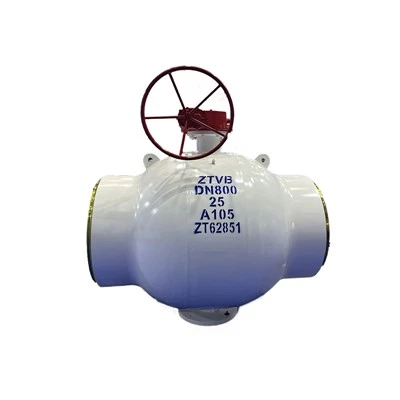
If you’re in the market for gate valves for your project—whether it’s a new commercial plumbing build, a refinery expansion, a water main replacement, or any application requiring tight shutoff—we can help you select the right design, size, and material for your needs. We supply gate valves in a range of materials, from cast iron for low-pressure water lines, to stainless steel for chemical processing, to carbon steel for high-temperature industrial applications. We also offer custom sizing and actuator options for large systems that need remote control. To discuss your requirements, feel free to reach out to our team to arrange a conversation about your valve needs.
Valves For further technical reference on gate valve design and application standards, please consult the following sources. API Standard 600, which outlines requirements for steel gate valves for the petroleum, petrochemical, and natural gas industries; ASME B16.10, which defines face-to-face and end-to-end dimensions for valves; and the Hydraulic Institute’s standards for valves in water supply and treatment systems.
Yancheng Suhao Valve Industry Co., Ltd.
We are one of the most experienced gate valve manufacturers and suppliers in China, specialized in providing high quality customized service. Please feel free to wholesale durable gate valve in stock here from our factory. Also, quotation is available.
Address: No. 33, Huashan Road, Economic Development Zone, Funing County, Jiangsu Province
E-mail: Support@suhao.net
WebSite: https://www.suhaoind.com/
