If you’ve ever worked with expanded metal for architectural panels, industrial grating, or custom safety guards, you’ve probably found yourself asking a simple question at some point: Can standard expanded metal be bent? As someone who’s supplied standard expanded metal to fabricators, construction teams, and small-scale manufacturers for over 12 years, I get this question almost weekly—and I used to give a short, vague answer back when I was new to the business. I’d say, “It depends” or “You can try, but it’s not ideal.” Over time, though, I’ve learned that the answer isn’t a one-word yes or no. It’s rooted in how expanded metal is made, what kind of standard material you’re working with, and what you’re actually trying to bend it into. Let’s break this down so you’ll know exactly what to expect next time you reach for a sheet from my warehouse. Standard Expanded Metal

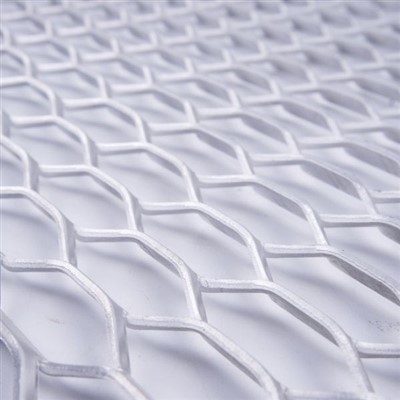
First, let’s start with a quick reminder of what standard expanded metal is, because that’s where the confusion usually starts. Standard expanded metal isn’t just a sheet of metal with holes punched in it. It’s made by cutting a solid sheet of metal (usually steel, aluminum, or stainless steel) in a pattern of slits, then stretching it in one direction to open those slits into uniform, diamond-shaped openings. The “standard” part here is key—it refers to the off-the-shelf sheets that most suppliers keep in stock, with consistent slit sizes, strand thicknesses, and opening dimensions. Unlike custom expanded metal, which might have irregular openings or thicker strands, standard expanded metal is made to strict, repeatable specs that work for most common applications.
Now, can you bend it? The short answer is yes, but only if you’re bending it along a specific axis—and only if you choose the right type of standard material. If you try to bend it the wrong way, you’re not just going to get a lopsided curve. You’ll end up with broken strands, stretched-out openings, or even cracks along the slits, which makes the material useless for whatever you’re building. Let’s talk about the axis first, because that’s the biggest make-or-break factor. Expanded metal has two main directions: the “machine direction” (MD), which is the direction the metal was stretched during manufacturing, and the “cross direction” (CD), which is perpendicular to that. Here’s the rule I’ve shared with every fabricator who’s asked: you can safely bend standard expanded metal only along the machine direction. Bending it along the cross direction? That’s a recipe for failure.
Why is that? Think of the strands of expanded metal like a grid of thin, connected metal strips. Along the machine direction, those strands run parallel to each other, linked only at the nodes where the slits meet. When you stretch the solid sheet, the strands in the machine direction are pulled taut but still flexible, so bending along that direction lets the material curve evenly without putting too much stress on the slits. Bend along the cross direction, though, and you’re forcing those strands to stretch or compress at an angle they weren’t designed for. The slits, which are clean cuts in the original sheet, can tear open further or crack when you bend them, because the cross direction puts uneven tension on the material’s weakest points. I’ve seen this happen to so many customers early on: someone will order a standard 4×8 steel sheet, try to bend it into a curved guardrail along the cross direction, and end up throwing half the sheet away because half the strands broke. That’s why we always make a point of marking the machine direction on every sheet we ship—most suppliers don’t do that, but it’s saved so many folks from mistakes.
Next, the type of standard metal you’re working with matters too. Not all standard expanded metal responds the same way to bending. Let’s break down the most common types: low-carbon steel, aluminum, and stainless steel. Low-carbon steel is the most bendable of the three, which is why it’s our top-selling standard expanded metal for applications that require some shaping, like curved industrial catwalk edges or decorative wall panels. It has a higher ductility, meaning it can stretch or bend slightly without cracking, as long as you stay along the machine direction. Aluminum is a bit trickier—it’s lighter, so it’s popular for exterior signage or window screens, but it’s more rigid than low-carbon steel. You can bend it along the machine direction, but you have to go slow, use a more gradual bend radius, and avoid any sharp curves. I had a customer last year who tried to bend a standard aluminum expanded metal sheet into a tight 6-inch radius for a storefront sign, and it cracked right along a slit. We switched him to a larger 12-inch radius, and it turned out perfect. Stainless steel, though, is the most challenging. It’s strong, corrosion-resistant, but much less ductile than the other two. You can bend standard stainless steel expanded metal along the machine direction, but only for gentle curves—sharp bends or tight radii will almost always cause cracks. Most of the time, we tell customers if they need curved stainless steel, we can supply a custom sheet with smaller slit sizes that are more flexible, but standard stock is limited for that.
Then there’s the strand thickness and mesh size, which are part of what makes a sheet “standard.” Standard expanded metal is categorized by its “gauge” (the thickness of the original metal sheet) and “openings per inch (OPI),” or the size of the diamond openings. Thinner-gauge sheets (like 16-gauge aluminum or 14-gauge steel) are way easier to bend than thicker gauges (like 10-gauge steel, which is heavy-duty for industrial grating). A thin 16-gauge standard steel sheet can be bent into a gentle curve with a basic brake press, but a 10-gauge sheet is so thick that even along the machine direction, you need a heavy-duty press and a lot of force. Smaller OPI (closer, smaller diamonds) also make bending easier, because the strands are shorter and more flexible. Larger OPI (bigger diamonds) mean longer strands, which can bend but might also twist or deform more easily if you’re not careful. I always tell fabricators to test a small scrap sheet first before bending a full 4×8 sheet—standard scrap is cheap, and it saves you from wasting a lot of material if your bending setup is too weak.
Now, what if you need to bend standard expanded metal along the cross direction? Is there any way to make that work? It’s possible, but it’s not recommended for long-term use. If you’re only making a minor bend, like a small lip along the edge of a panel, you might be able to do it with a hand roller or a press brake that applies even pressure. But if the bend is more than 15 degrees, or if it’s a curve that goes all the way along a sheet, you’re setting yourself up for problems. Bent strands will weaken the material, so it won’t hold up to heavy traffic or outdoor weather. I had a customer once who tried to bend a standard expanded metal fence panel along the cross direction to make a curved garden border. It looked okay at first, but a month later, a few strands on the inner side of the curve cracked, and the border sagged. If he’d bent it along the machine direction, it would have stayed intact. There are also some “bendable” standard expanded metal grades that are a bit more flexible, but even those aren’t designed for cross-direction bends. We sell those to customers who do a lot of shaping, but we always make sure to note that they’re only for machine direction bends.
Let’s also talk about common mistakes that people make when bending standard expanded metal, because those are just as important as the material specs. The biggest one is not accounting for the bend radius. The bend radius is how sharp or gentle your curve is. For most standard expanded metal, the minimum safe bend radius along the machine direction is 3 times the strand width. If your strand is 1/8 inch wide, your minimum radius is 3/8 inch. If you go smaller than that, you’ll put too much tension on the strands and slits, leading to cracks. Another mistake is not supporting the entire sheet while bending. Expanded metal can twist easily, especially thinner gauges. If you only clamp the edges, the middle will sag or bend unevenly. I always advise customers to use a rolling jig that supports the sheet along its entire length, so it bends evenly. Finally, don’t forget to deburr the edges of the slits before bending. Standard expanded metal is cut with a sharp blade, so the slit edges are rough. Deburring those edges with a file or a grinder removes sharp points that can crack when you bend the material, which is a quick step that makes a huge difference.
Now, if you’re working on a project and you’re still not sure if your standard expanded metal will bend the way you need it to, there’s a simple test you can do at home or in your shop. Grab a 12×12 inch scrap sheet of the same material, gauge, and OPI you’re planning to use. Mark the machine direction on it (if you don’t know, hold the sheet up to light—if the diamonds stretch out along one direction, that’s the machine direction). Then, use a basic hand roller or a vice to bend the scrap along that direction into a small curve. If it bends smoothly without any cracks or broken strands, you’re good to go. If it cracks, you either need a larger gauge, a different metal type, or a custom sheet. If you test a scrap from a non-stock sheet, don’t rely on that—scrap from standard stock is the only reliable way to test.
As someone who’s in the business of supplying standard expanded metal, I’ve seen firsthand how many people get tripped up by bending. It’s not a trick question, but it’s not as simple as a yes or no. Standard expanded metal can be bent, but only along the machine direction, only with the right material specs, and only with a proper bend radius and setup. If you try to cut corners by bending along the wrong direction, using a too-tight radius, or a heavy gauge material, you’ll end up with wasted time and material.
If you’re working on a project right now—whether it’s a curved guardrail, a decorative panel, a safety screen, or something else—and you’re not sure which standard expanded metal grade is right for your bending needs, I’m here to help. I’ve helped hundreds of fabricators and builders pick the right material, share tips for bending, and even send small scrap samples for testing. Don’t risk ruining a project because you’re not sure about the bending limits. Reach out, and we can walk through your project details together to make sure you get the right standard expanded metal that works for your needs.
Hexagon Perforated Metal References:
- Expanded Metal Manufacturing Guidelines, International Association of Metal Fabricators, 2021.
- Material Properties of Standard Expanded Metals, Steel Industry Technical Bulletin, 2022.
- Bending Techniques for Open Grid Metal Products, American Institute of Architects, 2020.
- Ductility Ratings for Common Expanded Metal Alloys, Aluminum Association Technical Report, 2021.
Anping Yilida Metal Wire Mesh Co., Ltd.
Anping Yilida Metal Wire Mesh Co., Ltd. is one of the most reliable standard expanded metal manufacturers and suppliers in China, also supports customized service. Please feel free to buy bulk high quality standard expanded metal made in China here from our factory.
Address: Wire Mesh Development Zone, Anping, Hebei Province, China
E-mail: sales@wiremesh-yg.cn
WebSite: https://www.yilidametal.com/
