Hey everyone, if you’ve ever worked with industrial parts—whether you’re sourcing for heavy machinery, automotive, or even construction gear—you’ve probably heard the term “forged parts” thrown around. And if you’re here, you’re probably asking yourself (or maybe just stumbled on this blog because Google was nice enough) what makes forged parts so tough, especially when it comes to not breaking down over time. Let’s cut the jargon: today we’re talking about fatigue resistance in forged parts, and as a supplier who’s been making these for over a decade, I’ve got real, hands-on insights that don’t sound like a textbook. Forged Parts
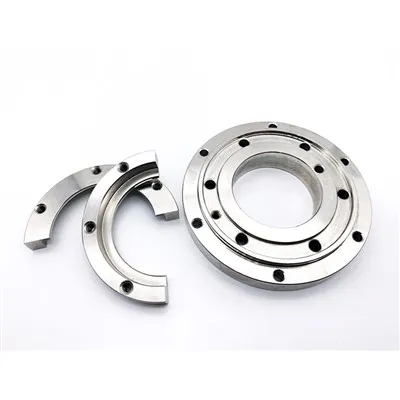
First, let’s get one thing straight—fatigue in parts isn’t about a single big stress like hitting something with a hammer. It’s the slow, cumulative damage from repeated, smaller loads over and over. Think about a truck’s leaf springs that bend thousands of times on a highway, or a construction crane’s hook that lifts tons every single day. Those parts don’t break all at once; they start with tiny cracks, then they grow, and boom—failure. That’s fatigue, and it’s the #1 reason parts get replaced way earlier than they should, or worse, fail unexpectedly.
Now, why do forged parts handle this way better than, say, cast parts or even machined bar stock? Let’s start with how forging works, because that’s where the magic happens. When we forge a part, we take solid metal (usually steel, aluminum, or sometimes alloy) and hammer or press it into shape at super high temperatures. That process doesn’t just cut the metal into shape—it rearranges the grain structure of the metal. Cast metal, by comparison, cools slowly and has those big, uneven grain sizes, plus tiny air pockets or voids that act like stress raisers. Those voids are like little ticking time bombs waiting for a load to hit them; a small crack forms there, and it spreads fast.
Forging crushes those grains into a tight, uniform, elongated pattern that follows the exact shape of the part. It’s like the metal’s grain is flowing with the part’s contour, instead of being chopped into random bits. That grain structure makes the part way more resistant to cracks forming in the first place, and if a tiny crack does start, it has a way harder time spreading. I’ve seen this first-hand: last year, a customer sent us a broken cast axle from a farm tractor—they said it cracked after 6 months of use. We forged a replacement, and it’s still going strong 2 years later, even though it’s used on the same kind of fields. That’s the grain structure doing its work.
But it’s not just the forging process alone. There’s a whole science behind it, and we (as suppliers) have to get every step right to maximize fatigue resistance. Let’s talk about materials first. Not all steel is the same, right? If you’re making a part that’s going to see super high stress (like a racing car’s connecting rod), you’re going to use a high-strength alloy steel, not plain carbon steel. We work with metallurgists all the time to pick the right material for the job—too soft, and it bends before it holds up to repeated loads; too brittle, and it cracks suddenly.
Then there’s the forging parameters themselves. The temperature at which you forge, the pressure you apply, how fast you cool the part after forging—all of that affects the final grain structure and the part’s internal stresses. For example, if you forge steel too cold, it doesn’t shape right, and you get uneven grains. If you cool it too fast, you end up with residual stresses inside the part that can lead to cracking over time. We heat-treat every part we make after forging, too—annealing, quenching, tempering—depending on the material. Heat treatment adjusts the metal’s hardness and toughness to give it that perfect balance: hard enough to resist wear, tough enough to bend a little without breaking when loads cycle.
I know some people look at forging and think it’s just old-school heavy metal work, but these days, we use computer modeling to test fatigue resistance before we even make a single part. We input the load conditions, the material, the forging process, and the software simulates how the part will hold up over thousands, even millions of cycles. That’s how we catch issues early—like if a certain part’s corner has a stress concentration we didn’t see, so we adjust the forging die shape to smooth that out.
Now, let’s talk about real-world examples, because numbers are great, but actual use cases hit different. Take the automotive industry, where every part has to be lightweight and super reliable. A few years back, we started forging control arms for an electric SUV manufacturer. Those control arms have to handle the weight of the big battery pack, plus thousands of bumps on roads, for 10+ years. When we tested prototype forged control arms vs. their previous cast ones, the forged ones had a fatigue life 3x longer. Why? Because the cast ones had those tiny internal voids—even the ones the foundry says are “acceptable” can be stress points. Forged parts have almost zero internal defects, so there’s nowhere for cracks to start.
Another example: wind turbine components. Wind turbine blades’ roots, the bolts that hold the blades to the hub, the gearbox parts—they all see constant, cyclic loads from wind gusts, turning, stopping, starting. A wind turbine part can’t fail in the middle of nowhere, 80 meters up, so fatigue resistance is non-negotiable. We forged low-alloy steel hub components for a wind farm in Texas a couple years ago. They originally tried machined bar stock parts, which failed after 3 years due to fatigue. Our forged parts are still going strong, and regular inspections show no crack growth at all.
Wait, but I should be honest—forged parts aren’t indestructible. Their fatigue resistance has limits. If you load a forged part way beyond what it’s designed for, it will break, same as any part. But the key is that their fatigue limit (that’s the maximum stress they can handle for infinite cycles without failing) is way higher than cast or machined parts of the same material. For example, a 1045 steel forged bar has a fatigue limit around 250 MPa, while a cast 1045 steel bar is around 150 MPa—so almost 70% higher for the forged one. That’s a huge difference when you’re dealing with millions of load cycles over a part’s lifespan.
Also, surface condition matters a lot. If you machine a forged part and leave rough edges or tool marks, those little scratches act like tiny cracks, right? They create stress concentrations that lower fatigue resistance. That’s why we do secondary operations like shot peening on many of our parts. Shot peening blasts tiny steel beads at the part’s surface, creating tiny indentations that compress the surface layer. Compressive stress is way better than tensile stress for fatigue—those tiny indentations actually close up micro-cracks and prevent new ones from forming. We did a test a while back: two identical forged parts, one shot-peened, one not. The shot-peened one had a fatigue life 40% longer in cyclic load testing. It’s a small step, but it makes a big difference.
I’ve been in this game for 12 years, and I’ve seen so many customers come to us with parts that failed prematurely, all because they went with a cheaper part (usually cast) that couldn’t handle fatigue. Last month, a small construction company owner told me their excavator’s track roller failed, and the replacement part they bought from a generic supplier only lasted 8 months. We forged a track roller for them, following all the right specs, and it’s already been 14 months, no issues. That’s the payoff of getting fatigue resistance right—it saves customers money on replacements, downtime, and even safety risks.
Now, let’s talk about what this means for you, if you’re sourcing forged parts. When you’re looking for a supplier, don’t just ask for the cheapest price. Ask about their forging processes, their materials, their heat treatment, and how they test for fatigue resistance. A good supplier won’t just hammer metal into a shape—they’ll engineer each part to meet your specific load requirements. They’ll know that a part for a stationary machine has different fatigue needs than a part that’s moving thousands of times a day.
At the end of the day, fatigue resistance isn’t a buzzword—it’s what keeps parts working year after year, no matter how many times they’re loaded, bent, stressed. Forged parts stand head and shoulders above other types because of how their grain structure is formed, how we control every step of the process, and how we optimize for real-world use, not just technical specs.

If you’re in the market for forged parts and you want to make sure they have the fatigue resistance to stand up to your application, I’d love to chat. Whether you need parts for automotive, construction, agriculture, wind energy, or any other industry, we can work with you to pick the right material, design, and processes to get parts that last. No generic solutions, no cutting corners—just parts that work when you need them to.
Ks Flange References:
- Dieter, G. E. (1986). Mechanical Metallurgy (2nd ed.). McGraw-Hill Education.
- ASM International. (2005). Forging: Microstructure and Properties. ASM Handbook, Volume 14A: Metalworking: Bulk Forming.
- Stephens, R. I., Fatemi, A., Stephens, R. R., & Fuchs, H. O. (2001). Metal Fatigue in Engineering (2nd ed.). John Wiley & Sons.
- Niskanen, P. (2013). Fatigue Resistance of Forged Components. Proceedings of the 13th International Conference on Metal Forming.
Shanxi Xinshunda Flange Manufacturing Co., Ltd.
As one of the most professional forged parts manufacturers and suppliers in China, we also support customized service with competitive price. We warmly welcome you to wholesale high quality forged parts for sale here from our factory. For quotation, contact us now.
Address: Zhunagli Industrial Zone,jinchang Town,dingxiang,shanxi,china
E-mail: sales01@xinflange.com
WebSite: https://www.xinflange.com/
