If you’re like most folks in the construction or utility game, you’ve probably used trenchers out in the middle of nowhere—farm fields, suburban development lots where the nearest neighbor is half a mile away, that kind of thing. But let’s be real: urban areas? That’s a whole different beast. Narrow sidewalks, buried gas and water lines, no space to park a big piece of equipment without annoying someone. For a while, I heard a lot of people say “no way” to trenchers in cities—too noisy, too big, too risky to tear up a street someone’s trying to walk on. But here’s the thing: after 12 years selling trenchers to contractors across the U.S., I’ve seen way more urban projects work with these machines than people think. The answer isn’t a flat “yes” or “no”—it’s about what kind of trencher you use, how you set it up, and how you play nice with the people around you. Trencher
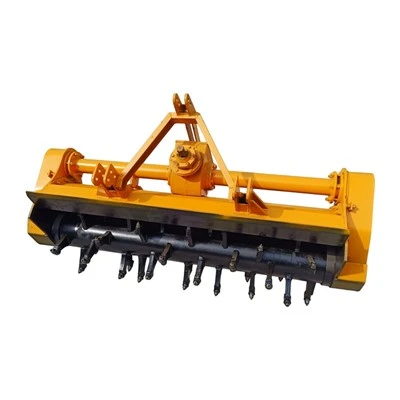
First, let’s get one thing straight: the “urban trencher” I’m not talking about the 8,000-pound walk-behind model you’d use to dig a 4-foot ditch for a fence. I’m talking compact, tight-turn models—think the kind that fit through a 3-foot gate, no wider than a standard lawn mower, with tracks instead of wheels so they don’t scuff asphalt or concrete. A lot of contractors I work with in cities swear by these for fiber optic installation, which is everywhere right now—cities laying lines for 5G, apartment buildings adding high-speed internet, even local governments upgrading street lighting. Last year, a crew in Chicago used one of our compact ride-on trenchers to dig a ditch along Michigan Avenue’s side streets. They didn’t have to close the whole block, just a 10-foot stretch for an hour at a time. The machine’s noise output was under 85 decibels—about as loud as a lawnmower, way quieter than a jackhammer—and they finished the job in 3 days, half the time it would’ve taken with hand digging. People walked past, didn’t even glare.
But wait, there are pitfalls. I’ve seen so many new contractors mess this up: they show up to a city job with a full-sized stand-on trencher, don’t check for buried utilities first, and end up hitting a water main. That’s not the trencher’s fault—that’s bad prep work. Urban areas have way more buried stuff—gas, electric, sewer, even old fiber lines no one knows about. You can’t just show up and start digging. You have to use a utility locator first, mark every line with paint or flags, and adjust the trencher’s depth so it doesn’t go deeper than 3 feet in most spots (that’s the sweet spot for fiber lines anyway). I always tell my customers: if you’re working in a city, don’t skip the locator. We even give free quick-start guides with every compact trencher that walks you through checking local utility maps before you fire it up.
Another big one: space. Urban construction zones rarely have the 10-foot clearance you get out in the country. That’s why I push compact models over full-sized ones. Our smallest ride-on trencher is 32 inches wide, fits through most residential sidewalk gaps, and has a zero-turn radius so you can pivot without backing up into a parked car or a fire hydrant. A lot of contractors use them for sidewalk repairs too—digging a narrow ditch for a new water line that runs right along the curb. I had a customer in Brooklyn last month use one to dig ditches for 12 townhouses, and he said he didn’t have to close the sidewalk once. He just moved the machine 2 feet at a time, worked around pedestrians, and finished the job without any noise complaints. Compare that to hand digging: two guys with shovels would take twice as long, and they’d get in everyone’s way.
But let’s be honest—there are times a trencher isn’t the right call. If you’re trying to dig a ditch 6 feet deep in a downtown core where every inch of space is taken by buildings, you might need to use a directional drill instead. But for shallow, narrow ditches (1 to 4 feet deep) where you need speed, a compact trencher beats everything else. It’s way faster than hand digging, cheaper than hiring a whole crew of laborers, and less disruptive than a backhoe—backhoes are too big for most sidewalks, and they tear up way more pavement to move around.
I’ve also seen a lot of innovation in trencher tech that makes urban use way easier. For example, our latest compact models have rubber tracks that don’t leave marks on asphalt or concrete. No more black tire streaks you have to power wash off after the job. Some even have sound-dampened engines, so if you’re working early in the morning (a lot of city jobs have strict hour rules), you don’t wake people up. Last year, we added a safety feature that stops the blade if it hits something hard—like a rock or a buried pipe. That’s a game-changer for urban areas, where you never know what’s under the ground. I can’t tell you how many customers told me this feature saved them from a costly mistake in their first urban project.
Now, let’s talk about the stuff no one tells you: the cost. A lot of small contractors think a compact trencher is too expensive. But when you do the math, it pays for itself in a few months. Let’s say you’re installing fiber lines in a city. Hand digging costs about $15 per linear foot, and takes 2 guys 2 hours per 10 feet. A compact trencher costs $3 per linear foot, and one operator can do 10 feet in 20 minutes. That’s a huge difference. Plus, you avoid labor costs, and you don’t have to pay for repairs if you hit a utility (as long as you did your prep work). I’ve had contractors come to me who were using hand shovels, and after buying a compact trencher, they doubled their business in a year because they could take on more urban jobs.
But here’s the catch: you have to follow city rules. Every city is different. Some require you to get a permit before using a trencher on a public street, some have noise ordinances that restrict work before 7 a.m. or after 7 p.m. A lot of my customers use our trencher’s timer feature to set the engine to only run during allowed hours, so they don’t get fined. I always tell new contractors to call the city’s public works department before they start—ask about permits, depth restrictions, even where they can park the machine. It takes 10 minutes, and saves you a lot of hassle.
Wait, but what about old, dense cities? Like Boston or Philadelphia, where the streets are narrow and the buildings are 100 years old. I thought for a long time that trenchers wouldn’t work there, but a customer of mine in Boston used a compact trencher to dig a ditch for a new gas line in a neighborhood where the streets are only 4 feet wide. He had to park the trencher on the sidewalk, and he used a small attachment that only digs 12 inches wide—perfect for that tight space. He finished the job in 2 days, and the local business owners didn’t even notice. Before that, they were using jackhammers and hand digging, which took a week and closed half the block. That’s when I realized: it’s not the city that’s the problem—it’s picking the wrong trencher.
I’ve also seen a lot of cities start to prefer compact trenchers because they’re better for the environment. Full-sized trenchers use more gas, but compact ones have smaller, more fuel-efficient engines. They also disturb less pavement, so you don’t have to replace as much asphalt after the job. That’s a big deal for cities that are trying to cut down on construction waste. Last year, a city in Portland even offered a small discount on permits for contractors who use compact trenchers for urban projects. That’s the kind of push that’s making trenchers way more accepted in cities than they used to be.
But let’s not sugarcoat it: there are still days when urban trencher use sucks. I had a customer last year in New York City who had to stop work three times because pedestrians kept walking into his work zone. He almost quit, but we helped him add a small safety barrier that’s easy to set up, and after that, no more issues. Another one hit a small utility line because the locator marked it in the wrong spot—turns out, the old map was out of date. But those are avoidable mistakes. The key is to plan ahead, use the right machine, and communicate with the people around you.
At the end of the day, the question isn’t “can a trencher be used in urban areas?” It’s “how do you use a trencher in urban areas?” If you go into it with a full-sized, loud machine, no prep work, and no regard for city rules, you’re going to have a bad time. But if you grab a compact, tight-turn model, do your utility checks, follow noise and permit rules, and keep the job zone small, you’ll be done fast, with fewer headaches, and no one will even remember you were there a week later.
I’ve been selling trenchers for over a decade, and I’ve seen the tech change so much that urban use is now one of the fastest-growing segments of our business. More and more contractors are realizing that a compact trencher isn’t just for farm fields—it’s for everywhere, even the busiest cities. If you’re a contractor looking to get into urban projects, don’t write off a trencher before you try a compact one. If you want to learn more about which model fits your needs, or just chat about the best way to use a trencher in urban areas, feel free to reach out to connect for a procurement consultation.
Lime Soil Mixer Blade References
- Occupational Safety and Health Administration (OSHA). (2022). Trencher Safety Guidelines for Urban Construction Sites.
- International Association of Plumbing and Mechanical Officials (IAPMO). (2023). Compact Equipment Usage in Municipal Utility Projects.
- U.S. Environmental Protection Agency (EPA). (2021). Fuel-Efficient Compact Construction Equipment for Urban Areas.
- National Utility Locating Contractors Association (NULCA). (2022). Pre-Dig Utility Check Protocols for Urban Trencher Operations.
Zhihao Highway Engineering Machinery Co., Ltd.
As one of the most professional trencher manufacturers and suppliers in China, we have world-leading production equipment and strong manufacturing capabilities. Please rest assured to wholesale customized trencher made in China here from our factory. For price consultation, contact us.
Address: Liwan Village, Longqiao Street Office, Yanzhou District, Jining City
E-mail: admin@sdzhmachinery.com
WebSite: https://www.zhroadmach.com/
