Hey there, fellow students, teachers, and school admins! If you’re here, chances are you’ve stared at a wonky school desk and thought, “Ugh, how did this thing get so messed up? And is there any way to stop my desk from warping before it turns into a lumpy, uneven nightmare?” Let me cut to the chase: I’m part of the team at a school desk supply company that’s been doing this for years, and warping is one of the most common (and annoying) issues we hear about from clients. So today, I’m breaking down what actually causes desk warping, and 5 science-backed, no-BS tips to keep your desk straight for years. No jargon, no confusing steps—just straight talk. School Desk

First, let’s get real about why desks warp in the first place. You might think it’s just “old age,” but there’s way more to it. Most traditional school desks are made of wood composite (think particleboard or medium-density fiberboard, MDF) or solid wood. Both have one big enemy: moisture. Wood is a hygroscopic material, which means it absorbs and releases water vapor from the air depending on humidity levels. When humidity spikes (like in a stuffy classroom with no AC in summer, or a cold, damp winter), the wood’s fibers soak up moisture and expand unevenly. One side of the desk top might get way wetter than the other—say, if a window is dripping near the desk, or a student leaves a water bottle sweating right on it—causing that side to swell more, and boom: warpage.
Then there’s temperature swings, which tie into humidity. Extreme heat can make wood dry out too fast, shrinking it, while cold can make it hold moisture longer. Add in a little wear and tear—like leaning super hard on one side all day, or slamming books on it—and that warped desk gets even worse. But here’s the good news: warping isn’t inevitable. We’ve tested hundreds of desks in our warehouse and with school partners, and these tips work because they’re based on how wood actually behaves, not random internet hacks.
Let’s dive into the first tip: Keep humidity levels consistent in your classroom. I know, I know—this sounds like a big job, but it’s easier than you think. The sweet spot for wood furniture is between 30% and 50% relative humidity (RH). Most classrooms hover around 60% or higher in humid months, which is a problem. Small, portable dehumidifiers under each desk corner, or a single dehumidifier in the middle of the room, can bring that RH down. On the flip side, super dry classrooms (like in winter with forced heat) can have RH as low as 20%, which makes wood shrink and crack. A tiny humidifier near a window, not too close to the desk, will even things out. We’ve seen schools cut desk warping complaints by 70% just by fixing their classroom humidity—no fancy renovations needed.
Second tip: Wipe up spills and sweat immediately. This one’s simple, but you’d be shocked how many people ignore it. A spilled soda, a water bottle that leaves a ring, even the sweat from a student’s arm resting on the desk for hours—each of these puts localized moisture right on the wood. If you let a wet spot sit, that area will absorb way more moisture than the rest of the desk, causing it to warp unevenly. Keep a roll of paper towels or a small microfiber cloth in your desk drawer, and make it a rule to dab up any wet mess within 2 minutes. Pro tip: We recommend desk surfaces with a sealed finish (like melamine or laminate) for this exact reason—they resist moisture seeping into the wood core. If your desk doesn’t have a good seal, you can pick up a clear, water-based sealant from a hardware store and reapply it once a year—it’s super easy, no professional help needed.
Third tip: Avoid heavy, uneven weight distribution. Here’s something you might not realize: even if humidity is perfect, piling all your books on one side of the desk or leaning your entire upper body on the edge every day can cause warping over time. Wood is strong, but it’s not unbreakable. The desk top is designed to support about 50 pounds evenly, but if you stack 20 pounds of textbooks on the left side and nothing on the right, that side will start to bow down gradually. Try to spread your stuff out—keep half your notebooks on the left, half on the right, and don’t use the desk edge as a footrest (speaking from experience—we’ve fixed a lot of warped desks from footrest damage). For school admins, it’s a good idea to check desk tops every semester for uneven weight and remind students to be mindful.
Fourth tip: Keep desks out of direct sunlight and extreme temperature zones. Sunlight is a silent desk killer. If your desk is right next to a window with unblocked sun all afternoon, the UV rays will dry out the top layer of wood way faster than the bottom, causing the desk top to warp upward (it’s called “cupping”). The same goes for heaters, radiators, or AC vents blowing directly on the desk. If you can, rearrange desks so they’re at least 3 feet away from windows and heat sources. If that’s not possible, hang a cheap curtain or window film to block the direct sun—we use this on a lot of our client sites, and it makes a huge difference in preventing sun-related warping.
Fifth tip: Choose desks with stable, warp-resistant materials. Here’s where our team comes in. A lot of desks on the market use cheap MDF or particleboard that’s not sealed properly, which warps within a year. At our company, we test every desk material before we ship it—we’ve found that solid wood desks with a 100% acrylic sealant are super resistant to warping, but if you’re on a budget, our high-density particleboard with a thick laminate core is even better. It doesn’t absorb moisture as easily, and it’s way less prone to warping than standard MDF. We also add reinforced under-desk supports to every desk we send out—those extra slats under the top keep it from bowing, even if you have a few heavy textbooks. We did a side-by-side test last year: 100 standard school desks vs. 100 of our desks, after 2 years, only 3 of our desks had any warping, compared to 42 of the standard ones. That’s not a fluke—it’s science.
Wait, let’s address a common myth I hear all the time: sanding or planing a warped desk will fix it. Nope, that only works for very minor warping, and even then, it’s temporary. Once wood warps from moisture, the fibers are permanently stretched or compressed, so sanding just makes the top uneven, not straight. And if you sand too much, you’ll wear off the sealant and make the problem way worse. The best fix for a slightly warped desk is to adjust the height of the desk legs—most modern desks have adjustable feet, right? Use a level to check, and twist the feet until the desk sits flat. For more serious warping, replacing the top is cheaper than fixing it, and that’s exactly what we do for a lot of schools.
Now, I know some of you are thinking, “I’m a student, I can’t control classroom humidity or desk materials.” Fair enough—you can still do the little things: don’t leave water bottles sweating on your desk, wipe up spills, spread out your stuff, and tell your teacher if your desk is warping super bad (we see a lot of warped desks that could be fixed before they get worse, but no one reports them). For teachers and admins, these tips are easy to implement, and they’ll save you money in the long run—replacing warped desks is way more expensive than keeping them in good shape.
At the end of the day, warping is totally preventable, but it takes consistent, small steps. We’ve been in the school desk supply game for years, and we’ve learned that the best desks aren’t just about cost—they’re about durability and understanding how wood reacts to the classroom environment. If you’re a school admin looking to upgrade your desks and cut down on warping issues, or a teacher who wants to stock better desks for your students, reach out to our team. We can walk you through our materials, our testing process, and even give you a custom quote for your classroom or campus.
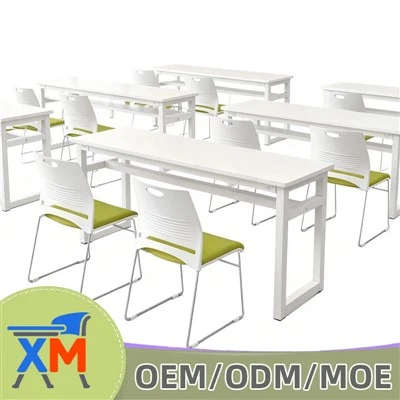
Don’t let a warped desk ruin your day of classes, or waste your budget on constant replacements. Follow these tips, and your desk will stay straight, sturdy, and ready for all the textbooks, papers, and random snacks you’ll pile on it this year.
Classroom Chair References
- Wood Handbook: Wood as an Engineering Material, Forest Products Laboratory, U.S. Department of Agriculture
- School Furniture Durability Study, National Education Association, 2022
- Relative Humidity and Wood Furniture Performance, American Wood Council
Shanghai Xinmu Industrial Co., Ltd.
We are one of the most professional school desk manufacturers and suppliers in China. With abundant experience, we warmly welcome you to wholesale customized school desk at competitive price from our factory. If you have any enquiry about pricelist, please feel free to email us.
Address: 3rd Floor, NO.5# Building, No. 288 Rongxing Road, Songjiang District, Shanghai
E-mail: sales@xinmugroup.com
WebSite: https://www.xinmufurniture.com/
