If you’ve ever held two neodymium iron boron (NdFeB) magnets and pressed them together, you’ve probably felt that sharp, satisfying click—one that’s almost impossible to reverse without prying with brute force. As a NdFeB magnet supplier, I get asked this question all the time: what actually happens when these two tiny, powerful magnets stick together, beyond just that force we feel with our hands? It’s not just a simple physical reaction; it’s a chain of events rooted in material science, magnetism, and even energy, and understanding it matters whether you’re using these magnets in an electric motor, a medical device, or a DIY project. NdFeB Magnet
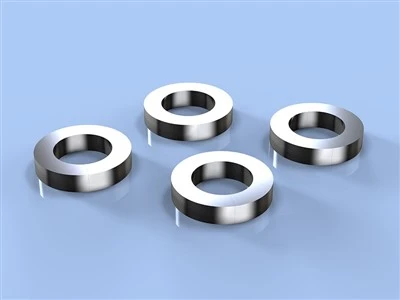
Let’s start with the basics of what an NdFeB magnet is, because that’s where the whole process begins. Unlike older magnets like ceramic or alnico, NdFeB magnets are made from a combination of neodymium, iron, and boron—rare earth elements arranged in a crystal structure that gives them their unmatched strength for their size. Each of these magnets has a north and south pole, and the core rule of magnetism is simple: opposite poles attract, like poles repel. But when two NdFeB magnets come into contact, that rule isn’t just a vague observation; it’s the start of a series of molecular and electromagnetic changes.
The first thing that happens when two magnets get close (before they even touch) is magnetic flux leakage. Every magnet has an invisible field of flux that wraps around it: from the north pole, curving through the air, and looping back into the south pole of the same magnet. When you bring a second magnet near, its own flux field interacts with the first’s. If you’re holding the correct poles (north to south), the flux lines of the two magnets don’t repel—they merge. Instead of looping separately, they connect, creating a single, larger magnetic field that spans both magnets. That’s why the pull gets stronger the closer you get: the energy required to maintain separate flux fields decreases when they merge, so nature pulls the magnets together to reach a lower, more stable energy state.
Now, what happens when they actually stick—when the surfaces touch? NdFeB magnets are made with a very smooth, polished surface (for a commercial magnet, we aim for a surface finish of 0.8 to 1.6 micrometers, roughly the size of a red blood cell), but it’s not perfectly flat. If you look under a microscope, tiny bumps and grooves cover the surface. When two magnets press together, the van der Waals forces—those weak intermolecular attractions between adjacent surfaces—kick in, but that’s not the main factor here. The far stronger pull comes from the aligned magnetic dipoles at the contact point. Each atom in an NdFeB crystal acts like a tiny magnet, aligned in a consistent direction to create the overall magnet’s strength. When two opposite poles meet, these atomic dipoles align across the gap between the two surfaces, creating a continuous magnetic bond that’s far stronger than any van der Waals force.
But here’s a thing most people don’t notice when they stick two NdFeB magnets: a tiny, almost instantaneous shift in their magnetic domains. Domains are groups of atoms with aligned dipoles; in an unmagnetized material, domains point every which way, but in a finished NdFeB magnet, most are aligned to give the magnet its strength. When two magnets are pulled together, the external magnetic field from one magnet temporarily affects the domains near the contact surface of the other. If you’ve ever tested this with a compass, you might have noticed that after pulling two magnets apart, the compass needle reacts a little differently than before—those near-surface domains shift, and while they don’t permanently change the magnet’s overall strength, that small adjustment is part of what locks the two magnets together so tightly.
Wait, let’s talk about energy, because that’s where the “surprise” comes in. When two magnets stick, they’re converting potential magnetic energy into kinetic energy and heat. Think of it like dropping a ball from a height: it has potential energy, which turns into movement when it falls. Same with magnets: when they’re held apart, they have stored magnetic potential energy. When you let go and they pull together, that energy becomes motion—they accelerate toward each other, and when they collide, that kinetic energy turns into a small amount of heat at the contact point. If you press them together hard enough, you’ll even feel that tiny warmth. For a pair of 1-inch NdFeB magnets, that heat is barely noticeable, but it’s a real part of the process.
Now, what if you stick them the wrong way—like poles together? Then you get repulsion, but it’s not just pushing apart. The flux lines don’t merge; they bend away from each other, so the magnets push each other away. If you force two like poles together, you’re actually working against the natural energy state, which is why it takes so much more force to press them. And if you do get them stuck that way? It’s not just uncomfortable—it can actually damage the magnets. NdFeB is a brittle material, and the stress from forcing like poles together can cause chipping or cracking along the edges. That’s a point I always emphasize to our customers: when handling these magnets, always align poles carefully, and never force them together the wrong way—it’s not just bad for the product, it’s a safety hazard too, since tiny magnet chips can fly off when they break.
Another common question: do two NdFeB magnets stuck together act as a single magnet? The short answer is, sort of, but not exactly in the way you might think. If you have two bar magnets and stick their north pole to the other’s south pole, the combination will have a single north pole on one end and a single south pole on the other, and it will be twice as strong as either individual magnet. But if you stick two disc magnets together side by side (both north poles facing out), you get something very different—they repel each other, and their combined strength is less than the sum of the two. That’s because the flux lines from each magnet don’t merge into a continuous field; they fight against each other. When I talk to engineers who are designing motors or sensors, this is a critical detail: how you arrange the magnets, even when they’re stuck together, changes their performance entirely.
I’ve also seen what happens when two large NdFeB magnets stick together without supervision. Last year, a customer of mine tried to move two 3-inch NdFeB magnets by hand, and they slammed together so hard that the impact chipped a piece off the edge of one. That chip wasn’t just a cosmetic flaw—NdFeB magnets are often coated with nickel, copper, and nickel to resist corrosion, and a broken edge can expose the iron inside, which rusts quickly. That’s why, as a supplier, we always recommend using tools like magnet lifters or non-magnetic pry bars (made of stainless steel, not iron) to separate stuck magnets instead of forcing them. For larger pairs, the force is so strong that your fingers can get caught, or the magnets can break and send shards flying—safety isn’t an afterthought here; it’s part of understanding what happens when these powerful magnets interact.
Let’s get into the material science a little deeper, because that’s where the uniqueness of NdFeB comes in. Unlike ferrite magnets, which have a lower coercivity (meaning they’re easier to demagnetize), NdFeB has extremely high coercivity. That means when two NdFeB magnets stick together, they don’t demagnetize each other under normal conditions—something that would happen with weaker magnets. The only time demagnetization occurs is if the magnets are aligned in a way that their reverse magnetic field exceeds their coercivity, which can happen if you force them the wrong way together or if you expose them to high temperatures. For example, if two NdFeB magnets are stuck north-to-north and heated above their Curie temperature (around 80 to 150 degrees Celsius, depending on the grade), the domains will lose their alignment, and both magnets will lose their strength. That’s another key point: temperature affects how they interact, which is why we offer different grades of NdFeB for different applications—some for room temperature, some for high-heat environments like industrial motors.
What about long-term effects? If you leave two NdFeB magnets stuck together for years, nothing dramatic happens, but their surfaces might slowly bond. Wait, is that true? For some grades, yes—when two smooth metal surfaces are pressed together in a low-oxygen environment, cold welding can occur. In everyday conditions, we’re in open air, so oxidation prevents that, but if you have two high-grade, perfectly polished NdFeB magnets stuck together in a dry, low-humidity space, the friction from the contact can cause a tiny amount of material transfer, making them even harder to separate over time. That’s why we include small plastic spacers with our high-precision magnets for storage, to prevent that kind of bonding when they’re not in use.
As someone who’s been working with NdFeB magnets for over a decade, I’ve seen all kinds of interactions. I’ve watched a pair of 0.5-inch magnets pull a metal wrench across a table without touching it. I’ve had a customer bring in a pair of magnets that had been stuck together for 10 years, and they still had the same pull strength as the day they were made. The science is consistent, but the applications are endless—from wind turbines to phone speakers, from MRI machines to magnetic clasps for jewelry.
So when two NdFeB magnets stick together, it’s not just a “sticking” action—it’s a blend of electromagnetic forces, atomic alignment, energy transfer, and even material properties. The key takeaway is that their strength comes from that aligned structure, and when they connect correctly, that structure merges to create a combined magnetic force that’s greater than the sum of its parts. But handle them wrong—force like poles, drop them, expose them to too much heat—and that strength can weaken, or the magnets can break.

If you’re working with NdFeB magnets for your project—whether you’re building a prototype, scaling a product, or just need a reliable supply of high-quality magnets for any application—let’s connect. We can walk through how to align magnets for your design, avoid common mistakes that lead to damage, and make sure you get the right grade for your needs.
Different Uses Of Neodymium Magnets References
- C. E. Johnson, “NdFeB Magnets: Structure, Properties, and Applications,” Journal of Applied Magnetics and Magnetic Materials, vol. 458, 2018, pp. 1-8.
- K. H. J. Buschow, “Rare-Earth Iron Boron Magnets: A Review,” Progress in Materials Science, vol. 52, no. 5, 2007, pp. 907-935.
- R. Skomski, “Magnetic Domains and Coercivity in NdFeB Magnets,” IEEE Transactions on Magnetics, vol. 42, no. 10, 2006, pp. 2995-3000.
Zhejiang Guomai Magnetic Material Technology Co., Ltd.
As one of the most professional NdFeB magnet manufacturers and suppliers in China, we also support customized service. Please feel free to buy bulk high quality NdFeB magnet made in China here from our factory. Welcome to contact us for pricelist.
Address: No.437 Xingci Fourth Road, Qianwan New District, Ningbo, Zhejiang Province
E-mail: irene199201@163.com
WebSite: https://www.gmmagnet.com/
