If you’ve ever dabbled in manufacturing, automation, or even visited a factory floor, you’ve probably heard the terms “CNC robot” and “industrial robot” thrown around like they’re the exact same thing. At first glance, it’s easy to mix them up—both are metal, have moving arms, and do repetitive work that humans used to handle. But here’s the thing: I’ve been supplying CNC robots for years, and I can tell you, they’re not interchangeable. The lines between them are blurrier than a smudged CNC engrave, but once you break down what each does, why businesses pick one over the other makes total sense. Let’s cut the jargon, no stuffy engineering textbooks here—just the straight talk from someone who sells these bad boys for a living. CNC Robot
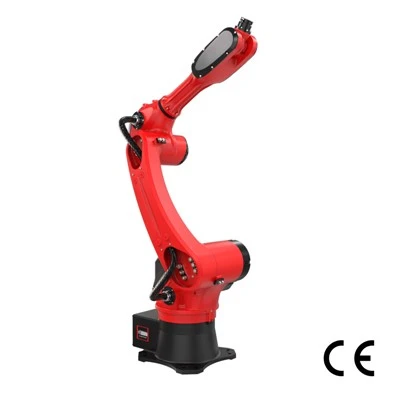
First, let’s start with the basics, because half the confusion comes from misdefining both. Industrial robots, in general, are the workhorses of modern factories. Think of those big, boxy arms you see in car plants—they weld car frames, pick up parts to move them around, spray paint, or even package boxes at the end of a line. They’re built for flexibility, right? You can re-program a lot of them to switch tasks quickly. One day they’re bolting door handles, the next they’re gluing dashboard trim. Their whole thing is adaptability across multiple jobs.
Now, a CNC robot? Wait, no—wait, let’s get this right: CNC stands for Computer Numerical Control, and it’s a system that controls machines, not just a robot. So a CNC robot is actually an industrial robot that’s been integrated with CNC technology for a very specific, repeatable, precision-heavy job. Wait, no, hold on—some people confuse standalone CNC machines (like milling machines, lathes) with CNC robots, but no, we’re talking about the robotic variants here. Our CNC robots are specifically designed to work with raw material, cutting, shaping, drilling, or finishing parts with way tighter tolerances than a human or even a standard industrial robot can pull off.
Let’s talk use cases first, because that’s where the real difference shows. I had a client last year who made custom metal parts for aerospace. They tried a standard industrial robot first to mill aluminum, and it messed up so many parts they threw out 20% of their raw stock. Why? A standard industrial robot’s movement isn’t precise enough for machining. Industrial robots usually have repeatability of, like, a few millimeters—great for moving a box that’s 10mm off center, but garbage if you need to drill a hole that’s exactly 0.005mm from the edge. Our CNC robots? They hit tolerances down to 0.001mm, because their entire system is calibrated to follow a CNC program that’s built for cutting, not moving.
Another big one: task specificity. Industrial robots are generalists. I’ve seen a single industrial robot do welding on one shift, material handling the next, and then bin picking on the third. They’re like a Swiss Army knife for the factory floor. CNC robots? They’re specialists. Most of the ones we supply are built for one core task—milling, routing, plasma cutting, or 3D finishing parts. You don’t re-program a CNC robot to do packaging; that’s like using a chef’s knife to open a shipping container—overkill and not designed for the job. That’s not to say you can’t do secondary tasks, but their whole hardware and software is built around machining and material removal, not general manipulation.
Wait, let’s talk about hardware, because that’s where the tech actually shows. Industrial robots usually have six axes of movement, right? That gives them that full, flexible arm motion to reach around obstacles, move parts from point A to B, twist, turn, whatever. But a lot of industrial robots are made with lighter materials, because they don’t need to exert a ton of force. When you’re just moving a 50kg car door, you don’t need a super heavy-duty arm. A CNC robot, on the other hand? They’re built for force. If you’re milling a solid block of steel, the tool has to push hard against the material, so the robot’s frame is way sturdier, less flexible. Flex is the enemy of precision when you’re cutting metal—even a tiny bend in the arm can throw off your cut. Also, most CNC robots have additional axes (like a rotary table or a linear rail) that let them spin or move the part without you having to reposition it manually, which again, is for consistent machining, not general tasks.
Software is another huge gap, and this is where a lot of new buyers mess up. Industrial robot software is mostly about path planning. You tell it “go from X to Y, pick up part Z,” and the software figures out the safest, fastest way to do that, avoiding collisions. It’s built for speed and flexibility. CNC robot software? It’s all about G-code. If you’ve ever seen G-code, it’s those lines of coordinates and commands that tell a machine exactly where to move, how fast, how deep to cut. Our CNC robots run on software that’s optimized specifically for reading G-code, generating precise tool paths, and adjusting for things like tool wear in real time. A standard industrial robot can’t read G-code properly—its software is for motion planning, not machining commands. I had a client ask if they could run their old industrial robot on a new job that needed G-code last quarter, and it would have cost them almost $10k to re-program, and they still wouldn’t get the precision they needed. It’s just not built for that.
Wait, let’s clear up a common myth here: a lot of people say “CNC robots are just industrial robots used for machining,” and technically that’s sorta true, but the key difference is that industrial robots are general-purpose by design, while CNC robots are purpose-built for a single, high-precision task. That’s why when I’m talking to potential buyers, I always ask first: “What are you actually making, and what’s the precision you need?” If they’re moving pallets around, welding frames, or doing bin picking, a standard industrial robot is way cheaper and more efficient. If they’re cutting aluminum for aerospace parts, routing wood for custom furniture, or machining small metal components with tight tolerances? A CNC robot is non-negotiable.
Another example: small business owners in custom woodworking. A lot of them use industrial robots to move parts, but when they need to cut a custom sign with 0.1mm precision, they’ll reach for a CNC robot. Why? Because if you mess up a sign, you wasted hours of material and time. CNC robots eliminate that error. I had a furniture maker client who switched from a standard industrial robot to our CNC robot last year, and his scrap rate dropped from 15% to less than 2%. That’s the kind of difference that makes a sale worth it, right?
Now, let’s talk about cost, because that’s a big factor for buyers. Industrial robots are usually cheaper upfront, because they’re mass-produced for general use. You can get a decent 6-axis industrial robot for $20k-$50k. A CNC robot? They start around $35k, and go up depending on size and precision. But here’s the catch: total cost of ownership. If you’re running a job that needs high precision, an industrial robot will cost you way more in scrap, rework, and downtime. I had a machining shop client who tried to save $15k by using an old industrial robot instead of a CNC robot, and over six months, they lost $25k in bad parts. That’s the math no one does when they first go shopping.
Wait, should I mention use cases that overlap? Yeah, because sometimes they do. For example, some factories use industrial robots to load and unload CNC machines. That’s a bridge between them. The industrial robot moves the raw part from a bin to the CNC (or CNC robot, whatever you want to call it) spindle, and then takes the finished part away. So they work together, but they’re still different tools. I supply both, actually—we sell industrial robots for material handling, and CNC robots for the machining end, because most businesses need both to run a smooth line.
Let me also address a mistake I see all the time: people calling any robotic machining tool a “CNC robot,” but not all robotic machining tools are the same. A standard industrial robot modified to do milling? That’s a hybrid, not a true CNC robot. The true CNC robots have the hardware and software built in from the start to handle that machining load and precision. The hybrids might be cheaper, but they don’t hold up to heavy use, and their precision is inconsistent over time. We don’t push those hybrids, because our brand is built on reliability for long runs.
So to wrap this up, let’s list the key differences in plain terms, no engineering jargon:
- Purpose: Industrial robots are generalists (move, weld, paint, handle). CNC robots are specialists (machine, cut, shape with high precision).
- Precision: Industrial robots have repeatability of ~1-5mm. CNC robots hit 0.001-0.1mm tolerances.
- Hardware: Industrial robots are lightweight, flexible for movement. CNC robots are heavy, rigid for force and no flex.
- Software: Industrial robots use motion planning. CNC robots run on G-code for machining paths.
- Cost: Industrial robots cheaper upfront, but higher long-term cost for precision jobs. CNC robots higher upfront, lower scrap/rework costs.
Now, if you’re reading this and trying to figure out which one you need, don’t guess. A lot of buyers jump on the cheaper option and end up regretting it. I’ve had so many clients come to me after wasting money on the wrong robot, asking for a CNC solution. If you’re in manufacturing, custom parts, or any job that needs consistent, precise material removal, our CNC robots are built exactly for that. If you’re moving pallets or doing general assembly, an industrial robot works, but if you ever need to ramp up precision, we can help you there too.

If you’re ready to stop wasting time and money on the wrong automation tool, reach out to us for a no-obligation consultation. We’ll walk through your specific needs, show you how our CNC robots fit (or if a different setup works better), and help you make a call that makes sense for your business. Don’t just take my word for it—we’ve helped hundreds of small and large shops cut scrap rates, increase output, and take on jobs they couldn’t do before because of bad automation.
Welding Robot References
- Robotics Industries Association. (2022). Industrial Robot Definitions and Standards.
- CNC Machine Tools Association. (2021). Robotic Machining System Specifications and Performance Metrics.
- Manufacturing Engineering Society International. (2023). Precision Requirements for Industrial Automation in Machining Applications.
Robotic Technology (GD) Co., Ltd.
As one of the most professional CNC robot manufacturers and suppliers in China, we have world-leading production equipment and strong manufacturing capabilities. Please feel free to buy durable CNC robot for sale here from our factory. Also, custom service is available.
Address: Room 102, No.30, Hengfeng 2nd Road, Daguo, Changping Town, Dongguan City, Guangdong, China
E-mail: admin@iroboticplus.com
WebSite: https://www.rbtic-tech.com/
