Hey there, Incycle Reagents for Zoonosis

If you’ve been scrolling around for zoonosis testing reagents lately, you’ve probably seen a lot of questions floating around – and one that comes up again and again for folks like me (I’m part of the team that supplies Incycle Reagents for zoonosis testing) is, “Wait, are these CE marked? Because when you’re dealing with animal-borne diseases, that mark isn’t just a sticker – it’s non-negotiable for getting products to market in Europe, and honestly, it’s a big reassurance for anyone using the tests too.”
Let me cut to the chase right off the bat: yes, all of our Incycle Reagents for zoonosis testing are CE marked. But I know “yes” is just a word unless you get the backstory, so let’s break this down like we’re chatting over a coffee (no stuffy jargon, I promise). First, I want to explain why CE marking matters here, because if you’re a vet clinic, a diagnostic lab, or even a livestock producer looking to keep your herd healthy, you don’t have time to waste on products that don’t meet the bar.
Zoonoses are those nasty diseases that jump from animals to humans – think salmonella, brucellosis, West Nile virus, the list goes on. Testing for these quickly and accurately isn’t just about keeping animals healthy; it’s about protecting public health too. That means every step of the process, from the reagents you use to run the test to the test kits themselves, has to meet strict standards. The CE marking is the European Union’s way of saying a product checks all those boxes for safety, performance, and quality before it’s sold in the EU/EEA. No cutting corners, no fudging numbers.
Now, I’ve been working in this space for about 8 years, so I’ve seen what happens when a product skips that process. A couple of years back, I heard about a small lab that bought unmarked zoonosis reagents online at a discount, and their test results were all over the place. They ended up misdiagnosing a brucellosis case in a dairy herd, which led to the whole herd being quarantined – millions in losses, plus public health scares. That’s the kind of headache we go out of our way to avoid, which is why CE marking for our Incycle Reagents isn’t an afterthought; it’s built into every step of how we develop and supply these products.
Let’s talk about what CE marking actually entails for our reagents, because it’s not just a one-and-done test. When we developed our Incycle Reagents line, we had to work with notified bodies – those independent organizations the EU approves to check if products meet regulatory rules. For zoonosis reagents, we had to prove a few key things: first, that the reagents are specific, meaning they don’t mix up one zoonosis with another. For example, our salmonella reagents only target salmonella antigens, not other gut bacteria that might make a test give a false positive. Second, they have to be sensitive – so they can pick up even low levels of the disease agent, which is super important for catching infections early when treatment works best.
We also had to do stability testing, because reagents that go bad in the fridge or during shipping are useless. Our Incycle Reagents are tested to last their full shelf life at the recommended storage temps, even when they’re shipped to places with a bit more volatile weather (I’m looking at you, summer in Southern Europe). That’s all part of the CE requirements, and we’ve passed every audit with flying colors – we don’t cut corners here.
Wait, but I know what some of you are thinking: “CE marking is just for the EU, right? I’m in the UK or Switzerland, do I even care?” The short answer is: it’s still relevant. The UK has its own UKCA marking now, but a lot of labs in the UK still recognize CE as a solid quality standard, and many countries outside the EU/EEA look to CE marking as a sign that a product is reliable, so it’s a big plus if you’re looking to expand. And for us, even if we only supplied the EU, that’s a huge market – so getting CE right is non-negotiable for our business, and for our customers.
I get it if you’re skeptical, too. The last few years have seen a flood of “CE marked” products that are basically knockoffs, especially online. You have to vet who you’re buying from, because a fake CE mark is easy to print on a label but impossible to back up with proper testing. That’s why I always tell customers to check the product’s documentation, or reach out to the supplier directly. For our Incycle Reagents, every batch comes with a CE certificate that lists the notified body that approved it, and you can always ask us for a copy – no hoops to jump through, we’re happy to send it over.
Let’s also talk about what this means for you, the person using these reagents. If you’re running a small animal clinic, using our CE marked Incycle Reagents means your test results are accurate enough to trust when you tell a client their dog has Lyme disease, or when you screen a herd for brucellosis. If you’re a larger diagnostic lab, it means you can streamline your workflow without worrying about whether your reagents will fail a proficiency test or regulatory audit. For livestock producers, it means you can catch zoonotic infections early, prevent outbreaks, and protect your animals and your bottom line.
I don’t want this to sound like a sales pitch – well, not just a sales pitch. I’ve seen the impact of bad testing reagents firsthand, so when we built our Incycle Reagents line, we made sure CE marking was the foundation, not an add-on. We didn’t just check a box to get into the EU market; we did it because it’s the right thing to do for anyone relying on these tests to keep animals and people safe.
Something I get asked a lot: “Do all your Incycle Reagents for zoonosis testing have CE marking, or just some?” All of them. We cover all the common zoonotic diseases – salmonella, campylobacter, brucellosis, Lyme, West Nile, leptospirosis – and every single one of those reagent lines has full CE certification. No exceptions. Because if one line didn’t, it would undermine everything we stand for, and we’re not going to put our name on a product that doesn’t meet the highest standards.
Another question: “How long has this CE marking been in place?” Our first Incycle Reagents for zoonosis got CE marked back in 2019, right around when the new EU in vitro diagnostic medical devices (IVD) regulations went into effect. We didn’t wait for the deadline – we wanted to make sure we were compliant from day one, because we knew it would benefit our customers. Since then, we’ve updated our processes and products to keep up with any regulatory changes, so our CE status is always current.
I know regulatory stuff can be boring, but it’s so important when you’re dealing with zoonoses. The last thing anyone wants is a test that gives a false negative, letting an infection spread to other animals or even humans. That’s why we invest so much time and money into getting the CE markings right, and into making sure our Incycle Reagents work consistently, batch after batch.
If you’re in the market for zoonosis testing reagents, I’d encourage you to ask the tough questions. Don’t just take a supplier’s word for it when they say their products are CE marked – ask for proof, ask about their testing processes, ask about stability and accuracy. For us, the answer is straightforward: yes, all our Incycle Reagents for zoonosis are CE marked, and we have the documents to back that up.
At the end of the day, when you’re picking reagents for zoonosis testing, you need two things: reliability, and peace of mind. CE marking gives you that peace of mind, and our Incycle Reagents give you the reliability. We’re proud of that, and we work hard every day to make sure we live up to that standard.
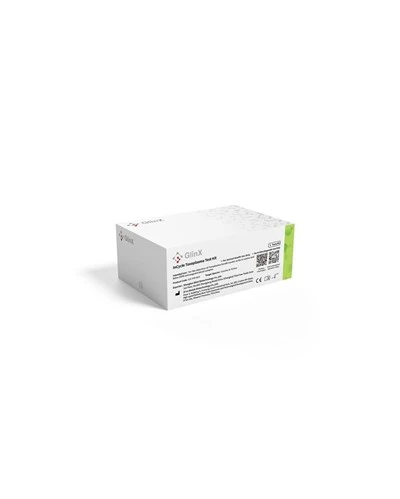
If you’re ready to chat more about our Incycle Reagents for zoonosis testing, want to ask for a copy of a CE certificate, or just have questions about how our reagents work with your testing workflow, don’t hesitate to reach out. We’re here to help, no pressure, just solid answers.
Incycle Reagents for Respiratory Disease References
- European Commission. (2017). In Vitro Diagnostic Medical Devices (IVD) Regulation (EU) 2017/746. Official Journal of the European Union.
- World Organisation for Animal Health (WOAH). (2022). Guidelines for the Validation of Diagnostic Tests for Zoonotic Diseases. WOAH Manual of Diagnostic Tests and Vaccines for Terrestrial Animals.
- European Medicines Agency (EMA). (2021). Notified Bodies for IVD Medical Devices: Compliance and Oversight. EMA Regulatory Update.
Shanghai GlinX Biotechnology Co., Ltd.
With abundant experience, we are one of the most professional incycle reagents for zoonosis manufacturers and suppliers in China. We warmly welcome you to buy high quality incycle reagents for zoonosis made in China here from our factory. If you have any enquiry about cooperation, please feel free to email us.
Address: No.398 Jiangsu Road, Changning District, Shanghai, China
E-mail: Info@glinxbio.com
WebSite: https://www.glinx-lab.com/
